
Cancel
Top tips

How to handle an accident in the Dakar Rally: conversation with Lídia Guerrero, physical trainer of the Repsol Rally Team
05 February 2026
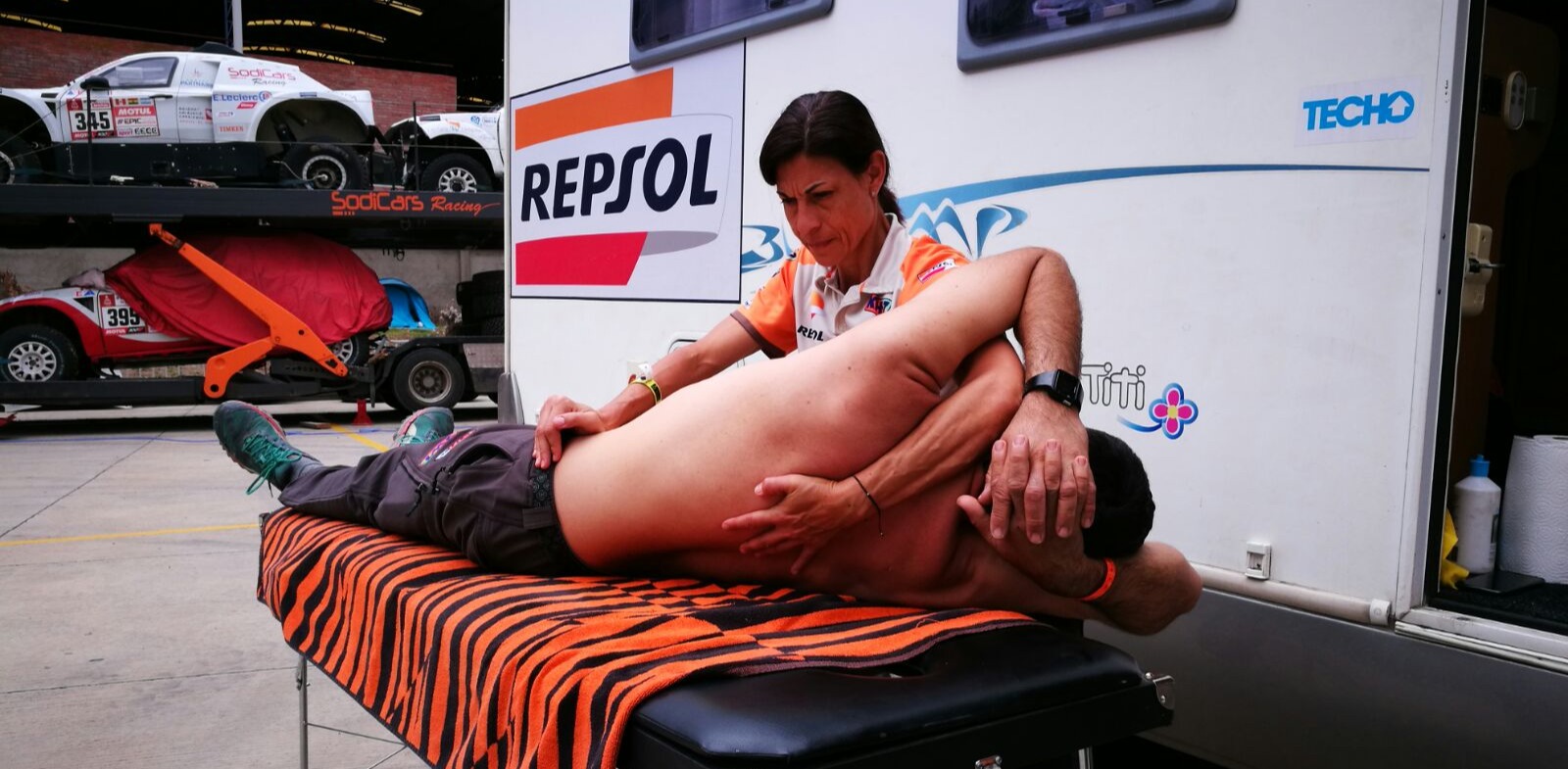
They had just recorded their best performance. The pace, the fine work of a whole year, and that serenity that only well-executed miles give. And all of a sudden, the accident. "This is what the Dakar Rally is like, if it were easy we wouldn't come," wrote Lídia Guerrero on her social media, physical trainer of the Repsol Rally Team and one of the people in charge of managing and rebuilding the team in a matter of hours.
"Even though you know the risk is there, you don't expect it. Once you analyze the situation with all the information you have, you look for the positive side, that both Isidre [Esteve] and Txema [Villalobos] are fine and that there is a Dakar Rally every year," explains Lídia in a conversation with Repsol Lubricants. In the end, she recalls, "if all the participants who start the Dakar Rally reached the final podium, that photo would not be so valuable."
For Lídia, "the Dakar Rally is epic, it's pushing yourself to the limit every day for two weeks, it's not being able to control everything. It's a roller coaster of emotions.” For this reason, in her approach, there is a clear compass: review what depends on the team - preparation, logistics, fine-tuning - and accept what cannot be controlled.
Consequently, her role in the race and in the day-to-day of the team combines physical preparation, practical nutrition, logistical support, communication content, and, in short, helping in any task that the Repsol Rally Team needs.
The first few hours after the accident
When the Esteve and Villalobos accident occurred, the team was already waiting in the next bivouac. "We were not aware of what was happening. We had everything set up waiting for them,” she recalls. The car appeared to be stopped at one point in the monitoring and it was reasonable to think of a breakdown. The red flag came in an unusual way.
"The OverDrive engineers came to ask us and then we started to worry, because if it is a question of mechanics they are the first to find out. A few minutes later, a person from the organization came to explain the situation to us," she continues. From there, the emergency protocol was activated.
Guerrero and part of the team moved to the participant service area to follow the evacuation. Isidre's first call, from the satellite phone, served to calm things down. "Once they were located, we got to work to recover the car," she says, emphasizing that "they were very long hours, of waiting and uncertainty." "At 3 in the morning, we already had Isidre and Txema resting in our ‘home' and the mechanics with the car also in the bivouac," she adds.
The body rules: protocol and patience
In the health field, Guerrero is clear: first, medicine and care. "I am guided by the instructions of the doctors. It is they who set the guidelines. Stay still, anti-inflammatories, cold... You can't do much, but you can make it as easy as possible for them to rest," she says, adding that "pain is the great ally in these cases, as it tells us if we are doing well or not."
Therefore, she is clear about the way to proceed: "As long as there is pain, we must be careful: we are not in a hurry and a bad recovery is the worst, because we have to return with guarantees. We have passed another medical check-up and we are doing well. We will go step by step to return to competition in the best possible way."
Looking ahead to 2026: returning stronger
The message to those who have supported the team this year is direct: "Do not stop doing it, your drive is important!" In sporting terms, the roadmap is to add World Championship races to prepare for the next Dakar Rally and recover the physical tone "as well as in 2025.”
Lídia combines her work in the Repsol Rally Team with those of director of the Fundació Isidre Esteve. There, she aims to ensure the necessary help to continue accompanying its users - people with physical disabilities and women victims of gender violence - in the improvement of their physical condition and their autonomy. “We keep working hard. Thanks to the support of the Generalitat, we have been able to acquire an exoskeleton with which we are greatly improving training. We are still learning how to get the most out of it," she says.
In addition, they are already preparing a new Fundació Isidre Esteve Grand Prix, which will celebrate its seventh edition. On July 3, 2026, this party will return to the Circuit de Barcelona‑Catalunya, where an awareness day will be held for the little ones with adapted sports and a relay race by bike, handbike, and tandem, where people with and without disabilities will mix in mixed teams. And, to top it all off, a great dinner on the home stretch with music and humor.
Related content
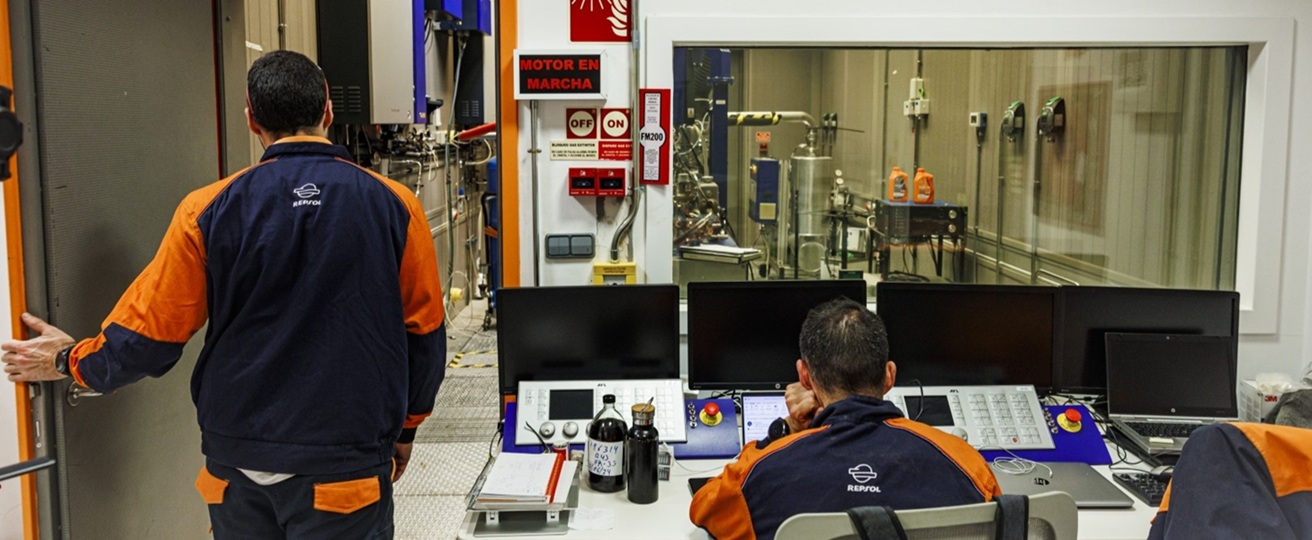
Simulation and test bench: this is how we study lubricants for hybrid engines
Learn how simulation and our test bench are combined to analyze the behavior of lubricants in hybrid engines.
Show more
09 April 2026
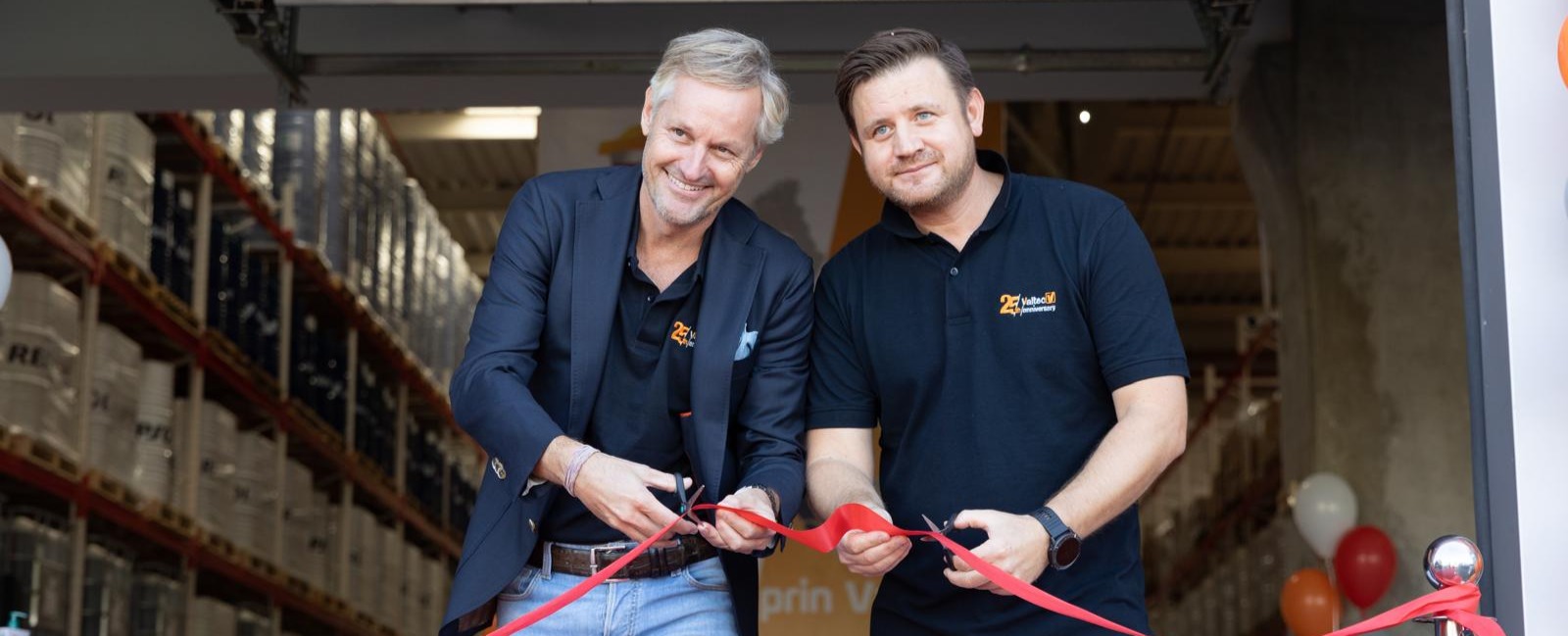
John Roskott (Valtec): "We want to double our business in the next 5 years"
John Roskott, CEO of Valtec, analyzes the keys to the market in Central and Eastern Europe: logistics, service, commercial network, and growth.
Show more
07 April 2026
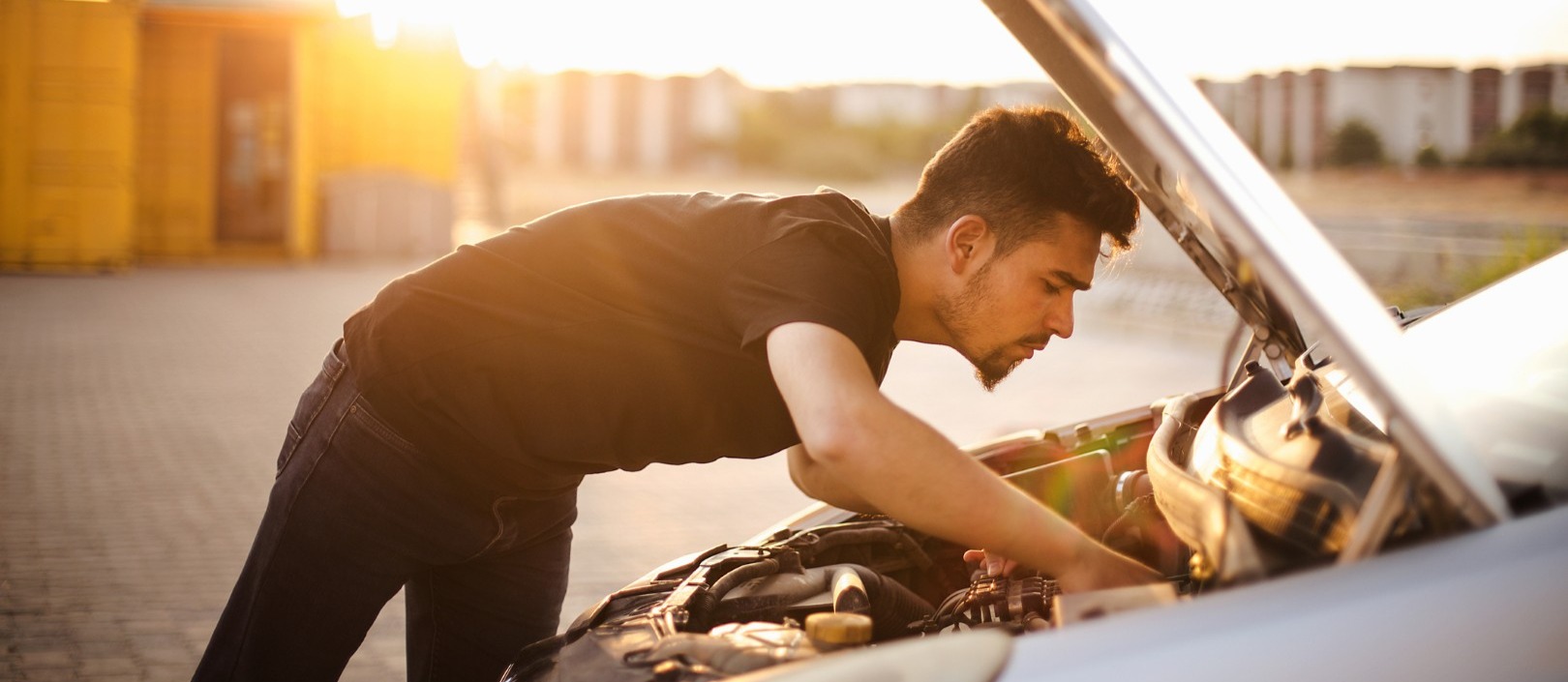
Long car journey: how to check the oil and avoid breakdowns
Use these maintenance tips to prevent surprises during long road trips. Start reading to prepare your next adventure.
Show more
26 March 2026