
Top tips

Motorcycle coolant: why water or a generic antifreeze is not enough
13 October 2026
Motorcycle coolant isn’t just dyed water or standard car antifreeze: it’s a formula designed to protect aluminum, seals and gaskets of an engine operating at high RPMs and demanding temperatures. In this guide, we explain what it does, why water alone or a non-approved product can damage the engine, and how to choose, check and change the correct coolant for your motorcycle. Coolant is essential for the proper functioning of the engine.
At Repsol Lubricants, we work with repair shops and manufacturers so that this apparently minor choice is not taken lightly, because a large part of the engine's useful life depends on it.
What coolant does in a motorcycle
On a motorcycle with a liquid-cooled engine (unlike air-cooled), the coolant circulates through the engine block, cylinder head and radiator to absorb the heat generated by the combustion and dissipate it into the air. Its role is not limited to “cooling”:
- It regulates the operating temperature of the engine within an optimal range, neither too cold (poor performance, more wear) nor too hot (risk of seizure).
- Raises the boiling point and reduces the freezing point of the system compared to water alone, thanks to the mixture with glycols (ethylene glycol or propylene glycol).
- Protects circuit metals - aluminum, copper, brass, and in some cases magnesium - from corrosion with an anti-corrosion additive package.
- Lubricates and protects the water pump and its seals, preventing them from working dry or with excessive friction.
- It prevents cavitation, a phenomenon by which vapor bubbles are formed that internally damage the coolant pump.
All these functions depend on the fluid having the appropriate chemical composition for the specific materials of the engine. This is where water alone or a generic product starts to fall short.
Specific coolant vs water alone
Using only water in the cooling circuit - a practice that is still seen in some makeshift or "quick-fix" repair shops — has several problems:
- Lower boiling point. Water boils at 100°C at atmospheric pressure; in heavy traffic conditions, prolonged idling, or hot weather, the engine can easily exceed that threshold, generating steam and pressure loss in the circuit.
- Risk of freezing. At 0°C the water freezes and expands, which can crack the engine block, cylinder head or radiator.
- No corrosion protection. Water promotes the oxidation of circuit metals, especially aluminum, which is widely used in modern motorcycle engines.
- No lubricating properties for the water pump, which accelerates the wear of its seals.
A specific coolant incorporates glycols and an additive package calculated to avoid these problems, designed for the engine’s materials and tolerances. Therefore, except for a one-off emergency - and with the intention of replacing it with coolant as soon as possible - water alone is not a maintenance solution, but a temporary band-aid.
Motorcycle coolant vs car antifreeze: are they interchangeable?
It is a common question, and the short answer is: no, they are not always interchangeable, even though both are based on a similar glycol.
The difference is in the anti-corrosion additive package, which is designed based on the metals present in the cooling circuit:
- Traditional IAT (Inorganic Additive Technology) car antifreezes use silicates and phosphates, designed for cast iron blocks and copper/brass radiators, which are becoming less common in motorcycles.
- Current motorcycles, with aluminum cylinder heads and radiators, and in some cases magnesium components, need OAT (Organic Acid Technology) or HOAT (Hybrid oat) formulations specifically calibrated to avoid attacking those metals.
- A poorly chosen car antifreeze can react differently with aluminum and accelerate corrosion rather than prevent it, the exact opposite of its intended purpose.
As we explained in our article on the most common antifreeze myths, the color of the liquid does not indicate its compatibility; what is relevant is the chemical technology of the product and its approval for the engine materials. The reference is always the manufacturer's manual: it is the only document that indicates what type of coolant and what specification that particular engine needs.
Table: coolant types and compatibility
|
Technology |
Main additives |
Target metals |
Recommended use |
|
IAT (Inorganic Technology) |
Silicates, phosphates, nitrates |
Cast iron, copper, brass |
Older vehicles with traditional metal engines |
|
OAT (Organic Technology) |
Organic carboxylic acids |
Aluminum, light alloys |
Modern vehicles with radiators and aluminum blocks |
|
HOAT (Hybrid Organic Acid Technology) |
Combination of silicates and organic acids |
Aluminum and cast iron |
Mixed-metal engines, with different metals in the cooling circuit |
|
Lobrid / POAT |
Low concentration of silicates combined with organic acids |
Aluminum, with additional corrosion protection |
Latest-generation vehicles with demanding manufacturer specifications |
Each coolant technology is formulated with a specific additive package that determines its compatibility with the materials of the cooling system. Mixing incompatible types can result in loss of anti-corrosion effectiveness or even damage to engine components. Therefore, it is essential to always consult the vehicle's manual and follow the manufacturer's recommendations before refilling or changing the coolant.
What happens if you use water or a non-approved product
Filling the cooling circuit with water only or with a product that does not meet the approval required by the manufacturer can have serious consequences for the engine. Unlike the coolant, water does not incorporate anticorrosive additives or antifreeze: it promotes the internal oxidation of metal components, reduces freeze protection, and has a lower boiling point, which increases the risk of overheating under demanding operating conditions.
Similarly, using an unapproved coolant or one that is incompatible with vehicle’s technology can cause chemical reactions between different additive packages, resulting in deposits, blockages in the radiator or oil passages, and a progressive loss of heat transfer capacity. In the medium term, this can lead to costly breakdowns, such as damage to the water pump, the radiator or even the cylinder head gasket.
Therefore, in an emergency, water, preferably distilled, should only be used as a strictly temporary solution, and replaced as soon as possible with the proper coolant specified by the manufacturer.
How to check the level safely
Before checking the coolant level, it is essential to wait until the engine is completely cool. Checking the level with a hot engine can cause serious burns, as the system is under pressure and the liquid can be forcefully ejected when the expansion tank cap is opened. It is important to have the coolant at the proper level.
Follow these steps to do so safely:
- Park the vehicle on a flat surface and turn off the engine.
- Wait at least 20-30 minutes for the engine and coolant to cool down.
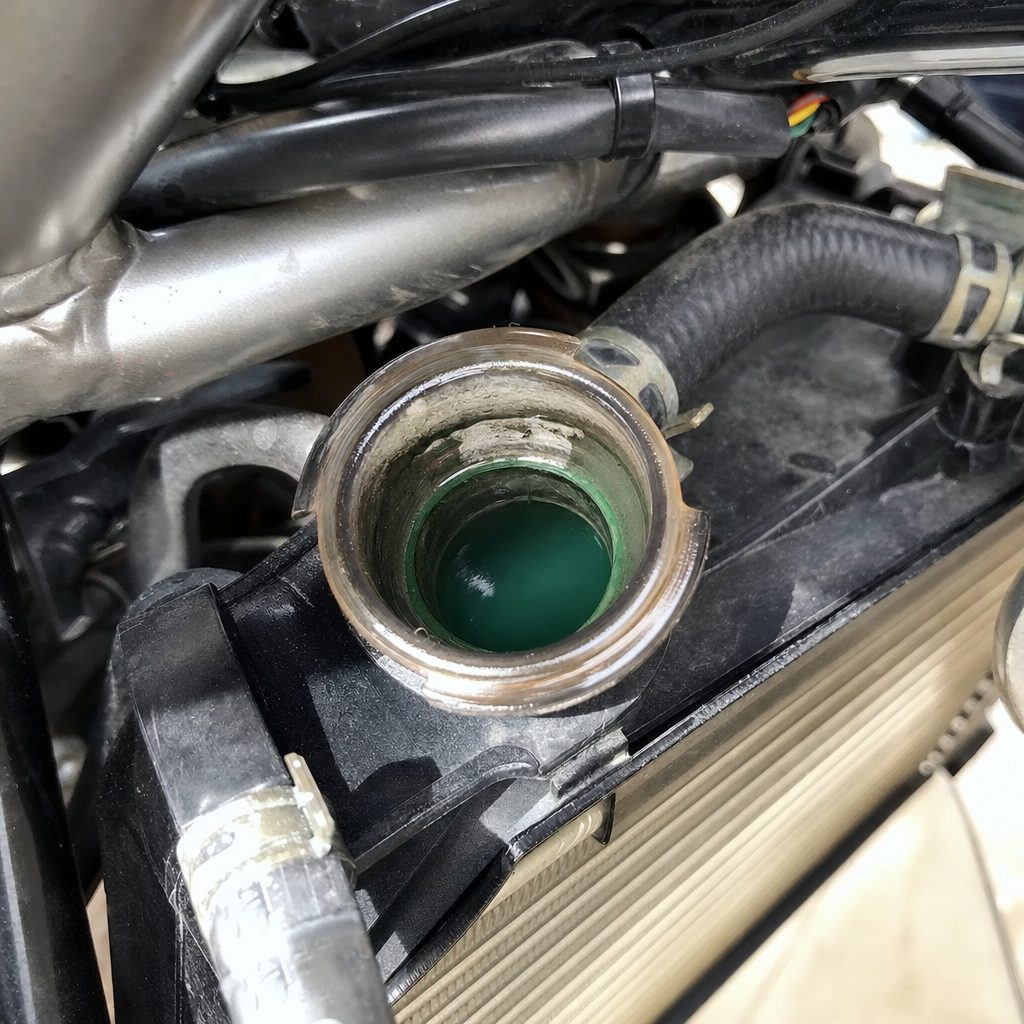
- Locate the expansion tank, usually translucent, and check the level without opening it, ensuring it is between the minimum and maximum marks.
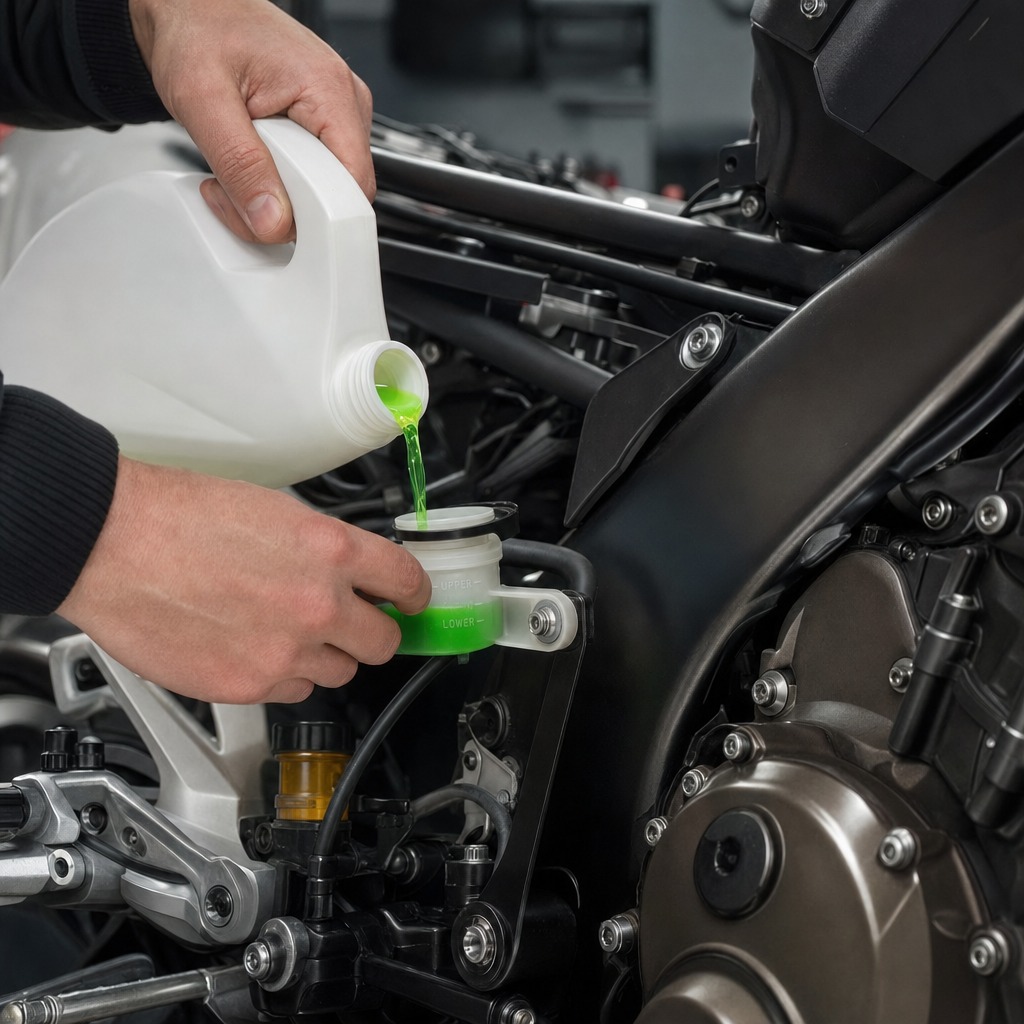
- If you need to add coolant, slowly unscrew the cap using a cloth to release the pressure progressively before removing it completely.
- Fill only with the coolant specified by the manufacturer, avoiding mixing different types or colors.
- Close the cap again, making sure it fits snugly.
How often to check and change the coolant
It is advisable to check the coolant level at least once a month, and always before taking long trips, with the engine cold and on a flat surface. As for the full coolant replacement, the frequency depends on the type of product and the vehicle manufacturer's recommendations, which usually range from 2 to 5 years or the mileage indicated in the maintenance manual. Using a quality coolant and adhering to these intervals help prevent internal corrosion of the circuit and keep its antifreeze and anti-corrosion properties in optimal condition.
If you notice that the coolant level drops frequently, it can be a symptom of a leak in the cooling system. In this case, you should know how to recognize antifreeze leaks and what to do, as well as take it to a specialized repair shop for an inspection.
Can coolants of different brands or colors be mixed?
It is not recommended to mix coolants of different brands, types or colors if you are not sure that they are compatible with each other. Each coolant is formulated with a specific combination of anticorrosive and antifreeze additives and mixing incompatible products can cause chemical reactions that reduce their effectiveness, generate sediment or damage internal cooling system components.
The color of the coolant is not a reliable indicator of its composition, as different manufacturers may use similar shades for products with different properties. Therefore, before refilling or changing the coolant, it is best to consult the vehicle manual and use the product approved by the manufacturer or take it to a specialized repair shop that can verify compatibility and perform, if necessary, a complete emptying and purging of the system before introducing a new one.
Repsol motorcycle coolant: Qualifier range
For motorcycles, Repsol has the Qualifier range, specifically formulated to meet the thermal and mechanical demands of two-wheeler engines. These coolants offer effective protection against corrosion and overheating, as well as maintaining their antifreeze and anti-corrosion properties during prolonged use, even in demanding riding conditions.
Qualifier coolants are designed to be compatible with common materials in motorcycle cooling systems, such as aluminum and other light alloys, helping to preserve the life of the engine and the cooling system in general. As always, it is recommended to check in the motorcycle manufacturer's manual to determine the correct type of coolant before replacing it or mixing it with the product already existing in the circuit.