
Top tips

Symptoms of dirty engine oil: how to detect it in time
24 August 2026
The main symptoms of dirty engine oil may include abnormal noises, rough engine operation, performance loss or increased fuel consumption. Since these signs can also be caused by other issues, it is best to check the lubricant before confirming the cause.
Engine oil gradually loses its properties due to wear, high temperatures, oxidation, and contaminant buildup. Following service intervals helps ensure proper lubrication and reduces the risk of deposits, premature wear, and internal damage.
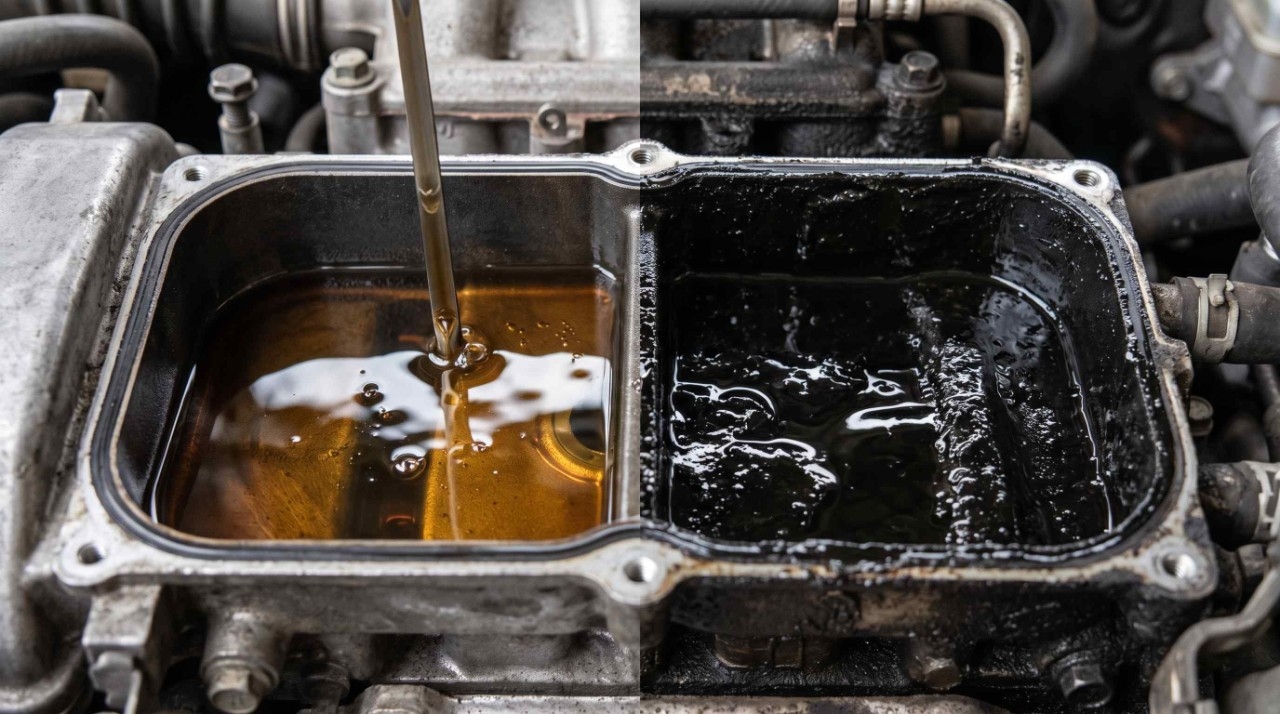
However, dark oil is not necessarily degraded. During operation, it may change color as it picks up particles and holds debris in suspension. To assess its condition, you must also consider operating time, texture, potential contaminants, and manufacturer recommendations.
How to check if engine oil is dirty
A visual inspection can offer useful insights, although it is no substitute for a professional technical inspection. To safely check the engine oil, always follow the procedure outlined in the manual.
If the vehicle has a dipstick:
- Park the vehicle on a flat surface.
- Turn off the engine and wait the recommended amount of time.
- Pull out the dipstick and wipe it with a clean rag or paper towel.
- Reinsert it, remove it and check the level.
- Check the texture, particles, and unusual odors.
The level must be between the minimum and maximum markings. Insufficient oil can impair lubrication, while exceeding the maximum mark can also disrupt engine operation.
Pay attention to:
- Visible particles, clumps or sludge.
- Excessively thick texture.
- Milky or foamy appearance.
- Strong fuel or burnt smell.
- Level too low or too high.
- A frequent drop in level between checks.
A milky appearance may indicate the presence of water or coolant. If this persists or coincides with a drop in coolant levels, it is best to visit a repair shop.
The fuel smell may indicate lubricant dilution; while a burning smell suggests excessive temperatures or a leak onto hot surfaces.
If the vehicle uses an electronic indicator, follow the instructions on the on-board computer. Some systems only offer a reliable reading with the car parked on level ground and the engine under specific conditions.
Main symptoms of dirty or degraded engine oil
Degraded oil can lose viscosity, oxidation resistance, and its ability to control deposits. It can also thicken or become contaminated with fuel, water, coolant, or soot.
Possible symptoms include:
- Increased engine noise.
- Rough operation.
- Loss of power.
- Increased consumption.
- Higher engine temperature.
- Burnt smell.
- Maintenance or pressure warnings messages.
These signs alone do not prove that the lubricant is the cause. For example, a loss of power may also be related to the intake, injection system, turbocharger, or emissions system.
It is important to differentiate level, pressure, dirt and degradation: they are not equivalent issues nor do they require the same solution.
Abnormal noises and metallic knocking upon startup
Engine oil creates a protective film between moving parts. When it loses viscosity or lubricating capacity, surface-to-surface contact increases, leading to knocking, rattling, metallic noises, or rougher operation.
During startup, the oil must circulate quickly to the various components. If it is excessively thick, contaminated or does not meet the required viscosity, it may take longer to reach certain areas.
However, a lubricant that has lost too much viscosity may fail to maintain the necessary oil film as the engine warms up. Both conditions can increase engine wear.
Changing the oil will not fix every noise. If there is already wear on the bearings, timing, camshaft, tappets or turbocharger, repairs will be necessary.
If the sound is loud, appears suddenly, or comes on with the oil warning light, pull over in a safe place, turn off the engine, and request professional assistance.
Dark exhaust smoke and loss of power
Unusual smoke and loss of performance can be caused by a variety of issues. Degraded or improper engine oil can affect engine operation, but it should not automatically be assumed to be the cause.
Generally, dark smoke is usually linked to poor combustion, lack of air, or insufficient airflow. Bluish smoke may indicate that the engine is burning oil, while persistent white smoke may be associated with unburned fuel, coolant or other issues.
Smoke color provides clues, but it does not allow a definitive diagnosis. Loss of power may also be caused by the injection system, sensors, turbocharger, or emissions system.
If the smoke persists or is accompanied by oil consumption, hesitations, warning lights, or a noticeable drop in performance, it is best to visit a repair shop.e.
Increased fuel consumption and engine temperature
Degraded oil can increase internal friction, forcing the engine to work harder. This can affect fuel efficiency, increase consumption, and contribute to higher operating temperature.
However, both symptoms have many possible causes. Fuel consumption also depends on filters, tire pressure, and driving style, while overheating can be linked to the cooling system.
If the temperature gauge reaches the warning zone, safely stop the vehicle and turn off the engine.

Why does the oil get dirty or degrade prematurely?
Engine oil is exposed to high temperatures, pressure fluctuations, and contact with combustion byproducts. Over time, its additives run out, and the product loses some of its effectiveness.
Several factors can accelerate this degradation:
- High temperatures.
- Short trips and repeated cold starts.
- Frequent city driving.
- Driving under heavy loads.
- Fuel, water, or coolant ingress.
- Soot buildup.
- Clogged oil filter.
- Extended service intervals.
- Incorrect viscosity or oil specifications.
- Mechanical issues that contaminate or consume lubricant.
Short trips can prevent the engine from reaching its normal operating temperature long enough. This promotes moisture buildup and potential fuel dilution.
Mileage is not the only factor when changing the oil. Time, operating conditions, and engine type also play a role.
What's the difference between dirty oil and low engine oil level?
Driving with degraded oil and driving with low oil levels are different problems.
When engine oil is dirty or degraded, the level may be correct, but the product has lost its protective properties or contains contaminants. Topping off with fresh oil does not restore the quality of the old oil: when due, it should be fully changed along with the filter.
When oil is low, the fluid level is below the required mark. This can prevent the system from receiving enough lubrication, leading to a drop in oil pressure. Topping off with a compatible oil can temporarily restore the level, but it is necessary to find out why it dropped.
|
Situation |
Quantity |
Status |
Recommended action |
|
Degraded oil |
It may be correct |
Degraded properties |
Replace oil and filter |
|
Low level |
Insufficient |
Variable |
Top off and find the cause |
|
Insufficient pressure |
Variable |
Variable |
Stop the engine and diagnose |
|
Overfilled |
Above the max line |
Variable |
Drain excess oil |
The oil warning light is usually related to oil pressure, not just fluid level. If it comes on while driving, safely stop the vehicle and check the manual. Topping off with oil will not necessarily resolve an oil pump failure, blockage, or internal mechanical issue.
Consequences of not changing dirty engine oil on time
Using the same lubricant beyond the recommended service interval can progressively reduce its ability to protect the engine.
Possible consequences include:
- Loss of lubricating properties.
- Sludge and deposit formation.
- Clogged oil passages.
- Increased friction and temperature.
- Premature engine wear.
- Turbocharger damage.
- Reduced performance.
- Higher risk of major engine failure.
Sludge consists of thick deposit that form when engine oil oxidizes or becomes contaminated. If sludge accumulates in the oil pan or oil passages, it can restrict oil flow to critical engine components.
Turbochargers are particularly sensitive to poor lubrication. In extreme cases, insufficient protection can cause component failure or engine lockup.
There is no single oil change interval: degradation depends on the vehicle, the oil and the conditions of use.
How to choose a longer-lasting, degradation-resistant engine oil
The right engine oil must meet the engine’s requirements, not just promises of long service life.
Before choosing it, check:
- The viscosity indicated in the manual.
- Technical specifications and approvals required.
- The type of engine.
- Compatibility with emissions control systems.
- Typical operating conditions.
- Approved service intervals.
- Overall engine condition.
Oxidation resistance and thermal stability help preserve the oil’s properties. Detergent and dispersant additives help control deposits and particulates.
However, no lubricant prevents degradation indefinitely. A product advertised as long-lasting should not be kept in service longer than specifed by the manufacturer.
To choose a Repsol oil, consult the manual and check in the technical data sheet that it meets the required viscosity, specifications and approvals.
In conclusion, the symptoms of dirty oil in the engine may include noise, rough operation, smoke, reduced performance or increased fuel consumption and engine temperature. However, these signs alone do not confirm that the oil is degraded.
Check the oil level regularly, follow the recommended service intervals, and always use a compatible oil. If the pressure warning light comes on, or if you notice loud metallic knocking, persistent smoke, or overheating, safely pull over and have the vehicle inspected by a professional.