
Top tips
GP Portugal
GP Portugal
Repsol Grand Prix of Portugal: what Moto2 and Moto3 racing teaches us about lubricants
Repsol Grand Prix of Portugal: what Moto2 and Moto3 racing teaches us about lubricants
Discover the demands placed on lubricants at Portimão, how Repsol uses Moto2 and Moto3 as a proving ground, and how that knowledge benefits the Extreme range.
The 2026 Repsol Grand Prix of Portugal has drawn to a close. Once again, the Algarve International Circuit in Portimão put riders, motorcycles and technology to the test at one of the calendar’s most demanding venues.
Officially named the Repsol Grand Prix of Portugal, the event also produced some defining moments in the championship. Marco Bezzecchi won the MotoGP race ahead of Jorge Martín, while Marc Márquez secured the 2026 MotoGP World Championship with an eighth-place finish.
In Moto2, the title fight heads to Valencia with just 4.5 points separating Manuel González and Izan Guevara. Moto3 champion Máximo Quiles, meanwhile, claimed his 12th victory of the season.
For Repsol Lubricants, the Portuguese Grand Prix was another opportunity to prove its technology in competition. This season, Repsol became the official and exclusive lubricant supplier to Moto2 and Moto3 through 2030. Crucially, the oil used is not a racing-only product: it is Extreme 4T 5W-40, a commercially available lubricant that any motorcyclist can buy.
The agreement marks a natural next step in Repsol’s more than 50-year involvement in motorsport, offering tangible proof of the performance, protection and reliability of its lubricants.
Why Portimão is so demanding on engines and lubricants
The Algarve International Circuit is famous for its undulating layout, steep climbs and descents, blind crests and sequence of corners that demand heavy braking followed almost immediately by hard acceleration.
These characteristics directly affect the way a motorcycle behaves and the demands placed on its components. Constant changes in load and engine speed put the engine, transmission and clutch under considerable strain throughout a race.
The 2026 edition underlined the point. Conditions at the circuit made for an intense weekend across all three classes, including a Moto2 race interrupted by a red flag that left the championship undecided until Valencia.
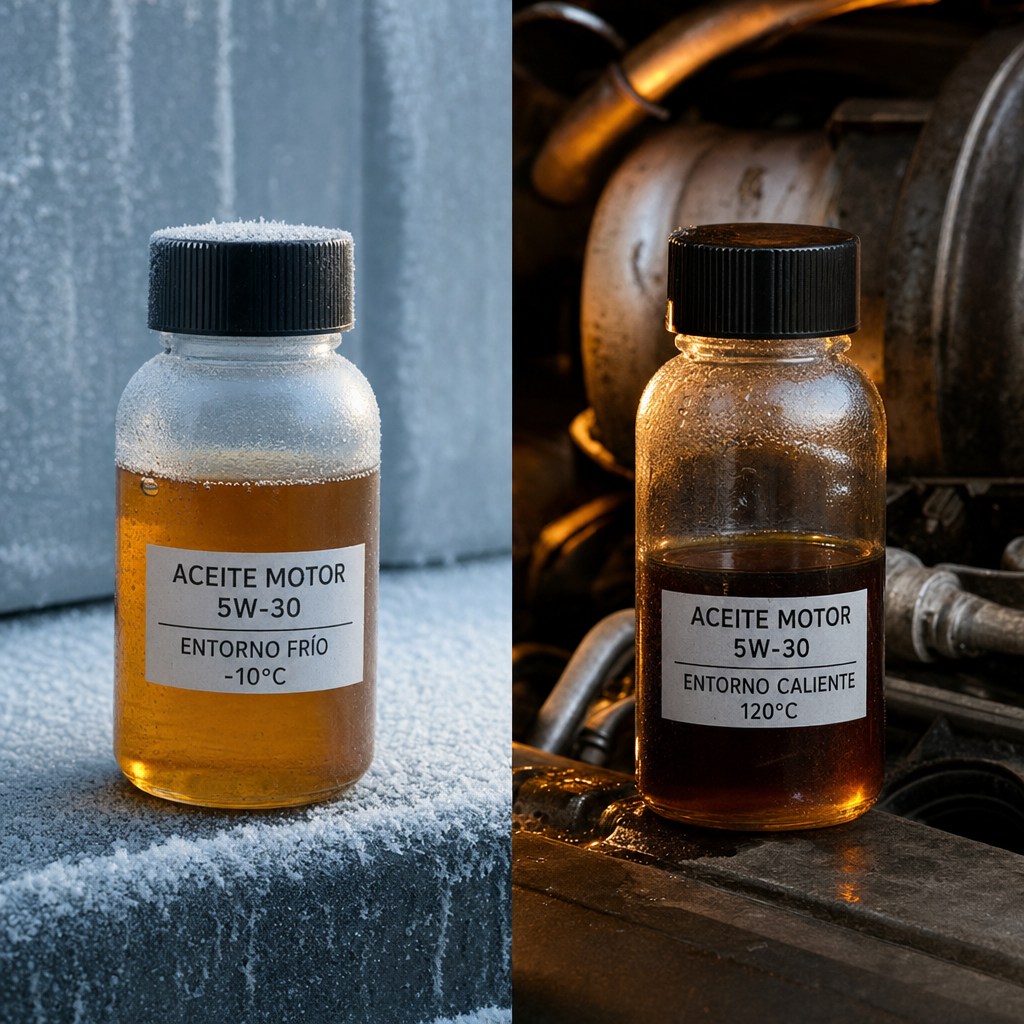
For the lubricant, this means withstanding high temperatures, high engine speeds and significant mechanical loads while delivering consistent performance from the start to the final lap.
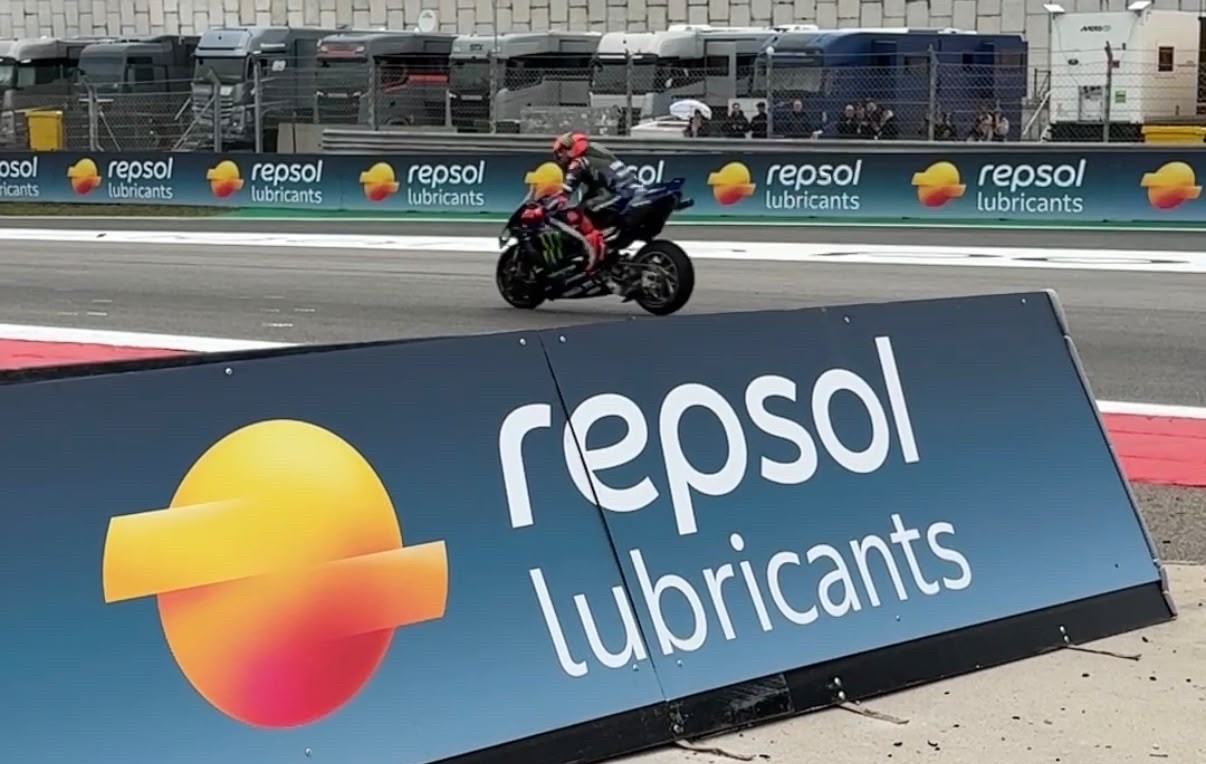
What a lubricant must withstand during a Grand Prix
What a lubricant must withstand during a Grand Prix
Lubricant is an essential part of an engine’s technology. Its role goes far beyond reducing friction: it must help minimise wear, withstand very high temperatures and maintain a robust protective film between moving parts throughout the race.
In racing, lubricant can also contribute to overall performance. The right formulation helps reduce internal losses and allows the engine to make more effective use of its available power, while supporting efficient operation of the clutch and gearbox.
It must also remain stable over extended periods of operation. High temperatures, sustained engine speeds and mechanical loads require a formulation that performs consistently lap after lap.
In motorcycles with a wet clutch, the lubricant must also provide the appropriate friction characteristics to ensure precise, predictable operation during gear changes and acceleration.
The challenge is to combine protection, consistent performance and accurate mechanical response from the opening lap to the chequered flag.
In other words, a racing lubricant cannot simply work well for a few minutes. It must remain reliable when the engine and its components are operating close to their limits.
Moto2 and Moto3 as proving grounds for lubricants
Moto2 and Moto3 as proving grounds for lubricants
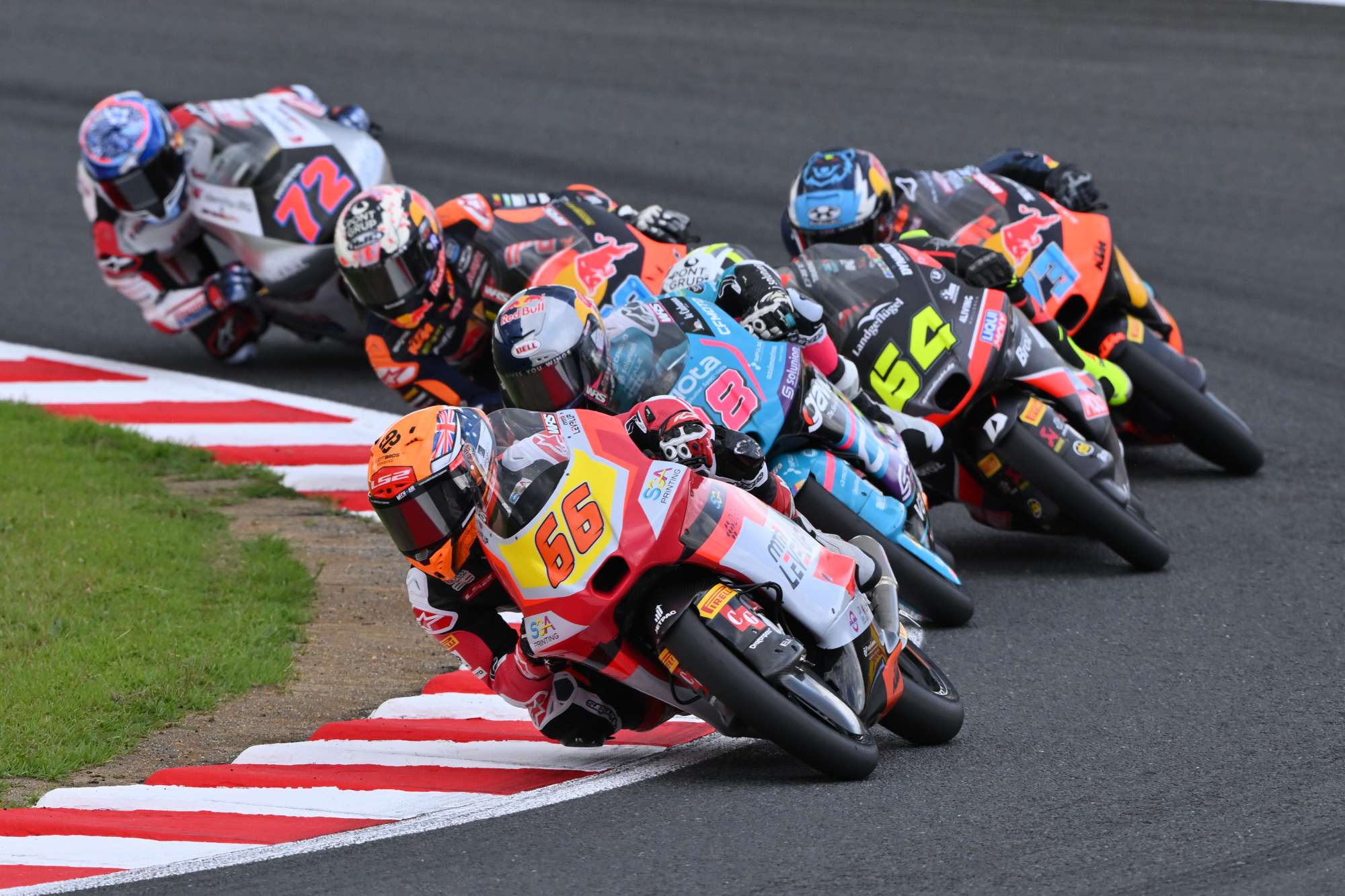
Moto2 and Moto3 are two major international racing platforms for Repsol Lubricants. As their official and exclusive lubricant supplier until 2030, Repsol can demonstrate product performance across different circuits, conditions and markets.
That exclusivity has a technical significance, too. Repsol is not simply seeking brand visibility; it uses these championships to demonstrate the quality, reliability and capabilities of its lubricants under the toughest operating conditions.
In Moto2, Repsol works alongside ExternPro, the company responsible for maintaining, preparing and technically inspecting the Triumph engines used by every team in the class. This partnership provides a specialist technical environment in which to continue developing and improving products for competition.
Each Grand Prix therefore provides a real-world opportunity to assess how formulations behave under different operating conditions. Practice, qualifying and the race itself put the product to the test throughout the entire weekend.
What Repsol learns from racing
For Repsol, motorsport acts as an extension of the Repsol Technology Lab.
In the laboratory, products are formulated, analysed and validated under controlled conditions. The circuit adds a real-world environment that is exceptionally demanding and difficult to reproduce in full. The resulting data helps engineers understand how formulations perform under pressure and identify opportunities to improve them.
The process follows a continuous cycle: formulate → test → analyse → improve.
This cycle is particularly meaningful in Moto2 and Moto3 because the product being tested on the racetrack is also available to consumers.
Both classes use Extreme 4T 5W-40, a fully synthetic lubricant featuring PAO Technology, developed to deliver thermal stability, wear protection and consistent performance in highly demanding conditions.
Racing thus completes a technological circle: a product shaped by decades of motorsport experience returns to the track to validate its capabilities under extreme conditions. The knowledge gained can then help drive further improvements for everyday riders.
From racetrack to road: the Repsol Lubricants Extreme range
From racetrack to road: the Repsol Lubricants Extreme range
The expertise accumulated through competition also feeds into Repsol Lubricants’ commercial range.
The Extreme range includes four-stroke motorcycle lubricants designed for different types of bikes and riding conditions. Among them is Extreme 4T 5W-40: the very same commercially available product used in Moto2 and Moto3.
This direct connection is one of the project’s defining strengths. Rather than developing an exclusive racing lubricant and transferring the lessons indirectly, Repsol is putting an oil that any rider can purchase through top-level motorcycle competition.
It is a clear example of how Repsol brings racing technology to the road. Knowledge gained in competition helped shape the product; the product then returns to the circuit for validation before making that expertise available to people riding every day.
Available viscosity grades
The Extreme range offers several viscosity grades to suit different motorcycles and manufacturers’ recommendations.
|
Range |
Available viscosity grades |
|
4T |
5W-40, 10W-40, 10W-50, 15W-50, 5W-50, 10W-60 |
|
Limited Edition |
5W-40, 10W-40, 15W-50 |
The appropriate viscosity grade should always be selected in line with the motorcycle manufacturer’s specifications, taking into account engine type, operating conditions and intended use.
2026 Portuguese Grand Prix: another test passed
2026 Portuguese Grand Prix: another test passed
Portimão provided valuable lessons and experiences, both on the sporting and technological fronts. For Repsol Lubricants, the Portuguese Grand Prix is much more than a race: it is a chance to demonstrate technology, generate knowledge and keep improving its products.
Motorsport is an environment for innovation and validation, helping turn insights from the track into products and solutions for different kinds of motorcyclists.
This philosophy also reflects Repsol Lubricants’ new Hi-Tech & Hi-Touch positioning: technology and performance proven in extreme conditions, combined with expertise translated into training, service and practical value for workshops, distributors and riders.
That is why the learning continues long after the last rider crosses the finish line. Every lap produces data. Every race presents new demands. And every challenge is an opportunity to push lubricant technology further.
Related Content
Related Content