
Top tips
Motor Oil Expiration
Motor Oil Expiration
Engine oil expiration once opened and unused
Engine oil expiration once opened and unused
Find out how long unopened and opened engine oil lasts, how to tell if it's expired, and how to store it properly.
Engine oil can degrade over time, whether it is unopened in its original container or you have been driving with it in the crankcase for months. We tell you how long it lasts in each case, what factors accelerate its deterioration and how to detect if the one you have in the garage is no longer suitable for your engine.
It is common to think that oil, being an industrial product, does not have an expiration date like food. However, its chemical properties do evolve over time, do to exposure to light or changes in temperature. At Repsol Lubricants we frequently receive this question from drivers and repair shops, so we are going to address it with clear and nuanced criteria, because in lubrication there are no one-size-fits-all answers: each manufacturer establishes its own recommendations.
Does engine oil really expire?
Does engine oil really expire?
Engine oil does not “expire” in the strict sense of ceasing to be usable overnight, as would happen with medication. What happens is that its additives (the chemical substances added to the base oil to improve properties such as wear resistance, engine cleanliness or oxidation stability) gradually lose their effectiveness over time.
This means that degraded oil does not immediately become dangerous, but it can lose some of its protective capacity. Viscosity (a fluid’s resistance to flow, that is, how “thick” or “thin” it is at a given temperature) and the stability of the mixture can also be affected if the product has been stored or in use for a long time.
Therefore, although we are not talking about a strict expiration date, it is reasonable to speak of a recommended shelf life, both for unopened oil and for oil already in the engine.
How long does unused engine oil last?
A sealed oil container, stored in proper conditions, retains its properties for an extended period. As a general industry guideline, many manufacturers estimate a shelf life of approximately 5 years from the date of manufacture, although this figure may vary depending on the specific formulation, the type of base oil, the additives used, and storage conditions.
There is no single figure valid for all products: the reference point should always be the one provided by the manufacturer on the packaging or in the product data sheet. If you have doubts about oil you’ve stored for a long time, check the batch number and date of manufacture, usually printed on the container.
How long does the oil last once opened or after months in the engine?
How long does the oil last once opened or after months in the engine?
It is worth distinguishing between two very different scenarios:
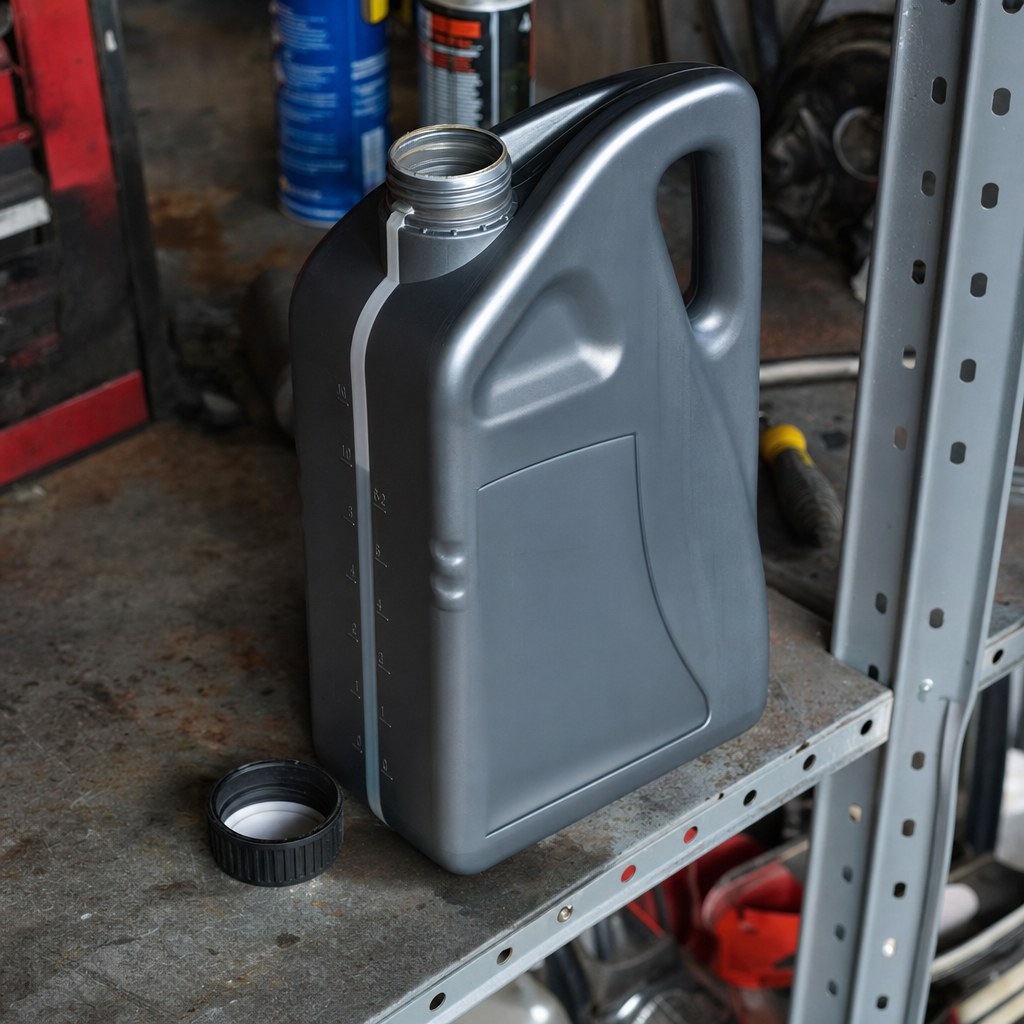
- Open, but unused oil (for example, a container you have opened and have leftover oil): once in contact with air, the oxidation process accelerates slightly compared to a sealed container. As a general rule, it is recommended to use it within a reasonable timeframe after opening and avoid storing it for years, though again, the official guideline is the one specified by the manufacturer.
- Oil already in the engine: here we are not talking about storage time, but about in-service life. This depends on the oil change interval recommended by the vehicle manufacturer, which is measured in kilometers and/or months (whichever comes first). Driving with oil that has exceeded that interval, even if the car has barely been driven, also poses a risk, because oil degrades over time even without putting many kilometers on it.
In both cases, the recommendation is the same: always check your vehicle manufacturer's manual or the product data sheet to find the exact interval that applies to your case.
Factors that accelerate its degradation: light, temperature, humidity
Several external factors influence the rate at which an oil loses its properties, both in storage and in use:
- Exposure to direct sunlight, which can promote oxidation reactions in the mixture.
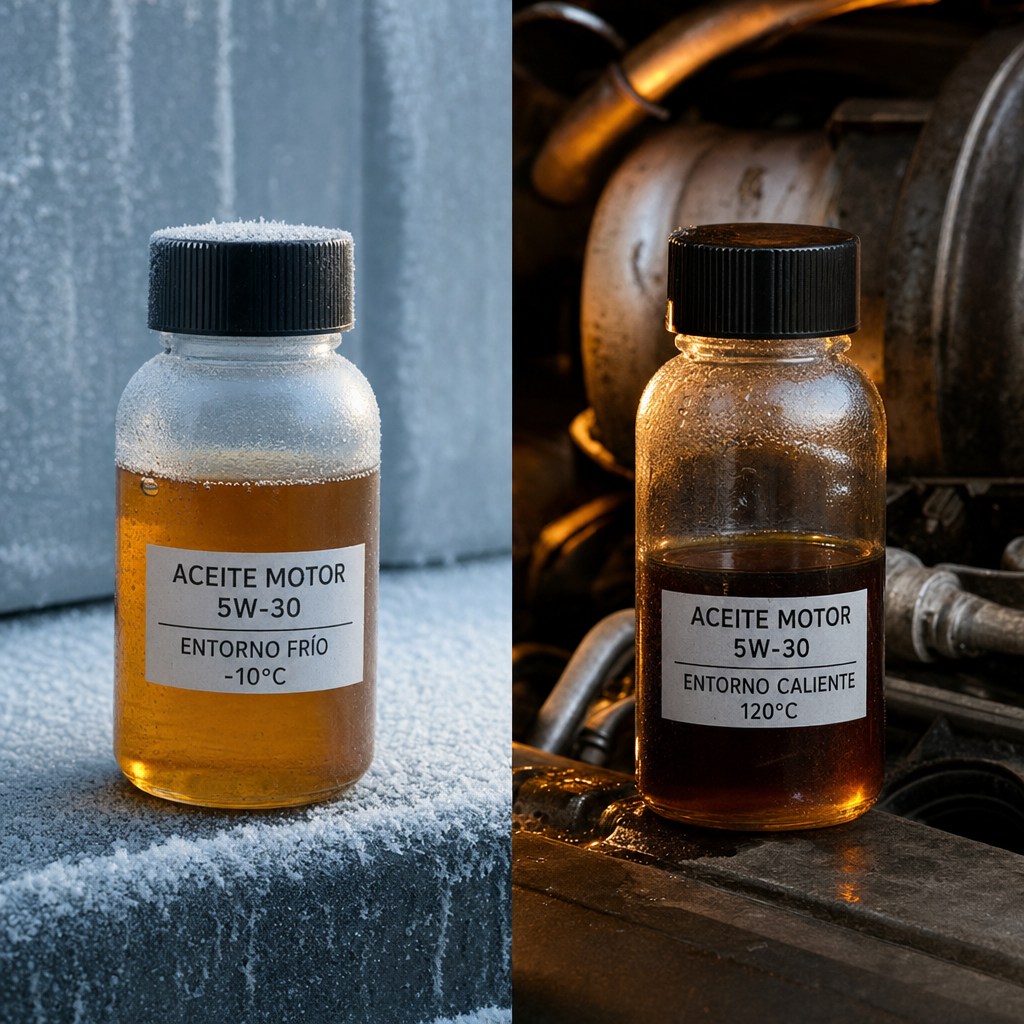
- Extreme or highly variable temperatures, especially sustained by heat, which accelerates the chemical degradation of additives.
- Ambient humidity, which can promote moisture ingress into the container if it is not airtight, compromising the product’s stability.
- Improperly sealed or damaged containers, which accelerate oxidation by increasing contact with air.
For this reason, the way the oil is stored is just as important as the product itself. That's why it's important to know how to properly store and handle oils and lubricants, to extend their shelf life.
How to tell if an oil is expired or degraded?
How to tell if an oil is expired or degraded?
It is not always easy to detect with the naked eye if an oil has lost its properties, but there are some indicative signs:
- Change in color or odor: A very dark oil, with a burnt or rancid odor, may indicate advanced oxidation.
- Presence of sediment or cloudiness: if upon shaking the container, you see suspended particles or the oil does not look homogeneous, it is a warning signal.
- Separation of the mixture: in some cases, severely degraded oil may show signs of component separation.
- Abnormal consistency: if the oil appears thicker or thinner than usual for its grade, it may have lost its original viscosity.
- Old manufacturing date or batch number: even if its appearance seems fine, if 5 years have passed since manufacture, it is wise not to use it without first checking with the manufacturer or distributor.
If you have any reasonable doubts, the safest option is not to use that oil and replace it with a guaranteed product. When it comes to lubrication, prevention is almost always cheaper than repair.
Consequences of using expired oil
Consequences of using expired oil
Using oil that has lost its properties, whether due to shelf life or excessive engine use, can have real consequences for vehicle’s mechanics:
- Reduced wear protection, as anti-wear additives lose their effectiveness.
- Reduced engine cleaning performance, encouraging the buildup of deposits and sludge.
- Loss of low-temperature fluidity, which can make cold starting difficult.
- Lower thermal stability, with the risk of faster oil degradation under severe operating conditions.
- Possible medium-term cumulative damage to internal engine components, which can lead to costly repairs.
None of these consequences are usually immediate or dramatic after a single use, but they do increase the risk of premature wear if it becomes common practice.
Engine oil does not expire suddenly, but it does lose its properties over time, both in storage and when running in the engine. Light, temperature, and humidity are the main factors that accelerate this process, and detecting changes in color, odor, or consistency can help you identify a product that is no longer suitable. When in doubt, always refer to your vehicle manufacturer's manual and the lubricant’s technical data sheet.
If you need to check which product fits your vehicle, you can consult our range of car lubricants or, if you have a two-wheeler, our range of motorcycle lubricants, where you will find the technical details for each product.
Related Content
Related Content