
Top tips

What oil does my car need? How to find out with or without a license plate
15 September 2026
If you are wondering what oil your car needs, the answer does not depend solely on the make or model of the vehicle. The appropriate lubricant is determined according to the specific characteristics of the engine, the vehicle version, the year of manufacture and the specifications indicated by the manufacturer.
Using the right oil is essential for the engine to work properly, as the lubricant helps to reduce friction, protect the internal parts, control the temperature and maintain overall engine performance.
There is no single universal oil for all cars. Even two seemingly similar vehicles may need different lubricants due to changes in the engine, internal tolerances, or emissions treatment systems.
To find out which type of oil your car needs, there are several ways:
- Refer to the manufacturer's manual.
- Review the maintenance documentation.
- Check the information available in the vehicle.
- Use a lubricants search engine by license plate or model.
- Consult the recommended technical specifications.
Oil viscosity, manufacturer approvals, and required standards are just as important as the brand of the lubricant itself.
How to find out which oil your car needs by license plate?
A license plate can be used as a quick way to identify a vehicle and locate relevant maintenance information. License plate lubricant search engines use databases that link this identification to details such as make, model and engine type.
However, the license plate should not be viewed as an isolated piece of data. To select the right lubricant, other factors must also be considered:
- Vehicle make and model.
- Specific engine type.
- Model year.
- Engine version.
- Recommended technical specifications.
- Approvals required by the manufacturer.
The Repsol lubricants search engine by license plate allows you to identify the vehicle and guide your choice of oil according to the information available. However, before changing the oil, it is advisable to review the manual and the specifications indicated by the manufacturer.

How to find out which oil your car needs without a license plate
If you don't have the license plate number, there are also other ways to identify the recommended oil.
The most reliable information is usually found in the vehicle's documentation and in the manufacturer's official instructions.
The manufacturer's manual
The owner’s manual is one of the primary sources for finding the recommended lubricant. It usually includes details such as:
- Oil viscosity.
- Standards or technical specifications.
- Required approvals.
- Oil capacity.
- Maintenance intervals.
Viscosity is one of the most well-known factors, but it is not the only criterion. For example, just because two oils are 5W-30, it does not mean they are equivalent. They can have different formulations and meet different requirements depending on the engine they were designed for.
It is also important to check if the vehicle has systems such as particulate filters or other emission treatment elements, as they may require lubricants with specific characteristics.
The oil label or oil filler cap
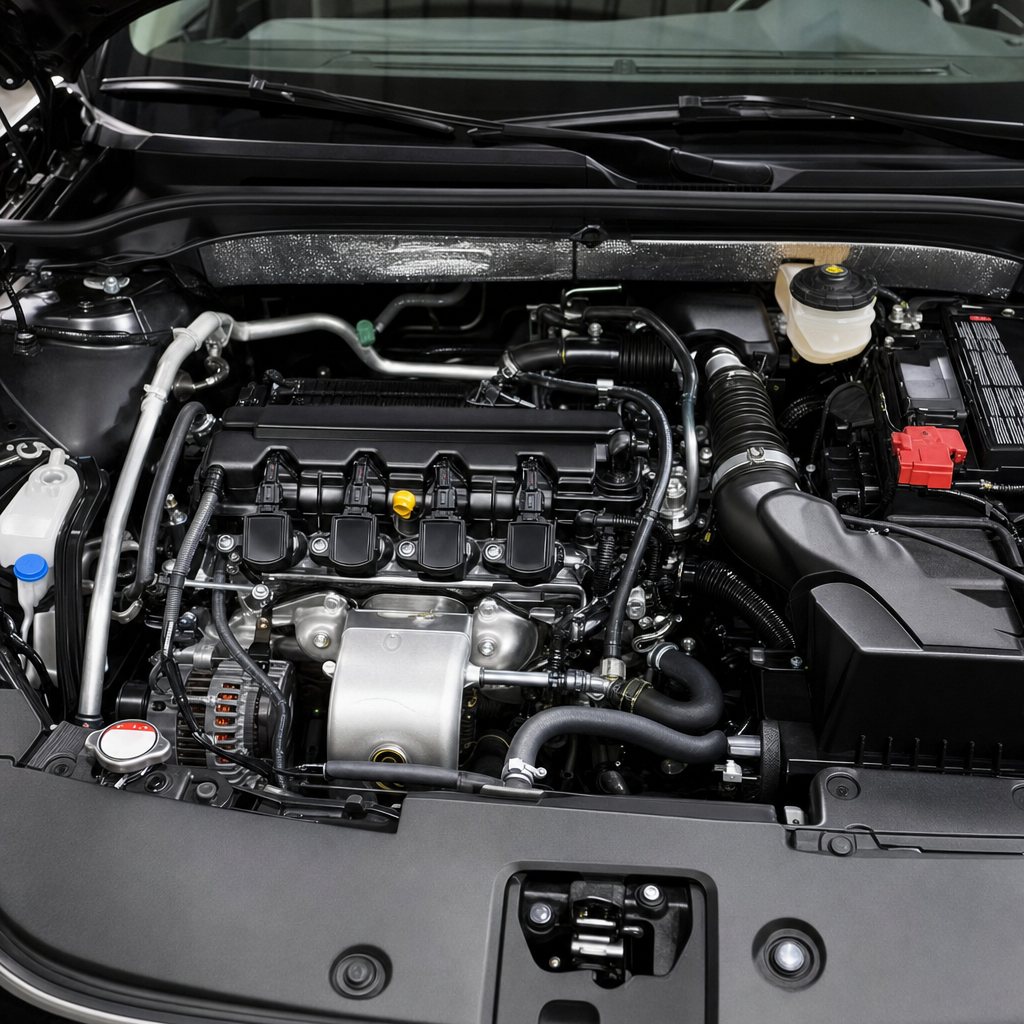
Some vehicles include information about the recommended lubricant on maintenance labels, vehicle documentation, or markings located in the engine compartment.
This information can be useful, especially when recent maintenance has been performed and the oil reference number was noted.
However, it should always be checked against the manufacturer's official specifications. An old label, an incorrect previous oil change or an engine modification can make that information insufficient.
What happens if you use the wrong oil?
Choosing an oil different from the one indicated by the manufacturer can affect engine performance, especially if it does not meet the necessary specifications.
Some aspects that may be affected are:
- Protection against engine wear.
- Temperature performance.
- Compatibility with emission systems.
- Deposit formation.
- Operation of specific internal components.
Viscosity is important because it determines how the oil circulates at different temperatures. A lubricant that is too thin or too thick for a specific engine may not perform as intended.
It is also important to check manufacturer approvals. Two oils with the same viscosity may not be equivalent if one meets the standards required by the manufacturer and the other does not.
Using the wrong oil does not necessarily mean the engine will suffer an immediate breakdown, but using a lubricant that does not meet the recommended specifications for a long time can increase the risk of damage.
When in doubt about compatibility or mixing products, it is advisable to consult the technical specifications. Please see the article on the risks and consequences of mixing oils for more information.
Can another oil be used temporarily in an emergency?
In a specific situation, you may need to top up the oil without having the exact same product on hand. In that case, the priority is to avoid driving with an insufficient level of lubricant.
Even so, the ideal solution is to always use the oil recommended by the manufacturer.
If there is no other option:
- Check that the oil is compatible with the engine.
- Check that it meets the necessary specifications.
- Avoid changing the viscosity grade without confirming that it is approved.
- Do not turn a one-off solution into routine maintenance.
After an emergency, it is advisable to check the condition of the lubricant and perform the necessary maintenance.
Mixing oils or changing products regularly without checking compatibility can change the final characteristics of the lubricant. Therefore, before making changes, it is recommended to consult the vehicle specifications.
Find your exact oil with the Repsol Lubricants search engine
Once you have identified your vehicle’s details, choosing the right lubricant becomes much easier.
The Repsol lubricants search engine allows you to consult the available options according to the vehicle information and guide your product selection.
You can access:
To make the right choice, it is advisable to check:
- Make and model.
- Engine type.
- Vehicle year.
- Recommended viscosity.
- Technical specifications.
- Required approvals.
The Repsol lubricant range includes solutions developed for different automotive needs. Selecting a specific product should always be based on vehicle requirements rather than personal preference.
In conclusion, finding out which oil your car needs requires consulting vehicle-specific information. The license plate can help identify the vehicle, but the final decision should be based on the manufacturer's manual, viscosity, specifications, and required manufacturer approvals.
Choosing the right lubricant helps protect the engine and maintain its performance for longer. Before carrying out an oil change, always check that the chosen product meets your vehicle’s specifications.