
Top tips

How to check the car's oil level (with or without a dipstick)
22 September 2026
Knowing how to check the car's oil level is a simple task that helps keep the engine protected and detect potential leaks or abnormal consumption. Oil reduces friction between internal parts, helps control temperature, and keeps the circuit clean.
Both a level that is too low and an excess of oil can be harmful. Therefore, the measurement must be carried out correctly, always using a lubricant that meets the manufacturer's specifications.
The check can be made using a physical dipstick or, in some modern vehicles, through an electronic system integrated into the instrument panel.
Before checking the level: park on level ground with the engine off
For a reliable reading, park the vehicle on a flat surface and turn off the engine. Then, wait for the time indicated in the manual for the oil to settle in the oil pan.
Many manufacturers recommend performing the check with the engine cold, although some state that it should be done a few minutes after turning it off, when it has reached its operating temperature.
Conditions may vary depending on the model, so always consult the vehicle’s manual.
How to check the car’s oil with a dipstick
If your car has a disptick, the general procedure is as follows:
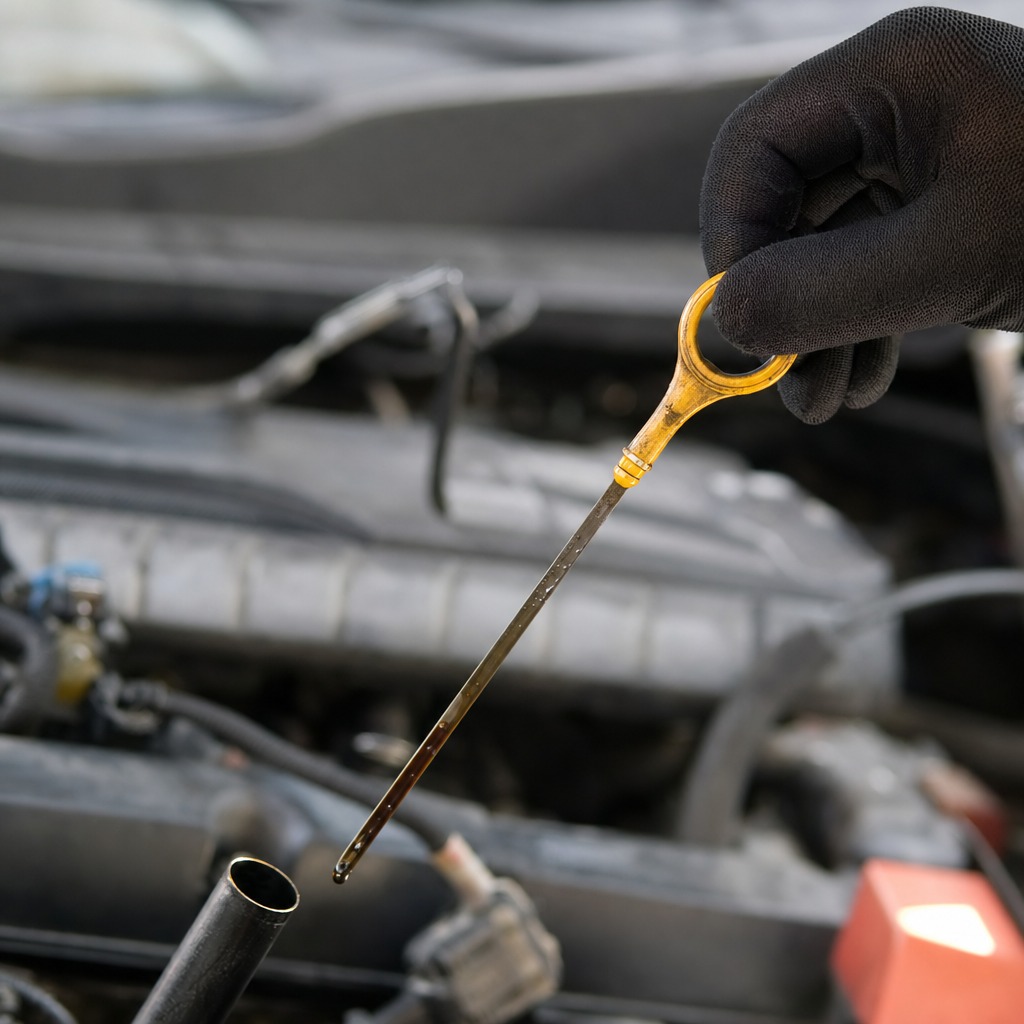
- Locate the dipstick, usually identified by a brightly colored handle.
- Pull it out completely and wipe it clean with a lint-free cloth or paper towel.
- Reinsert it all the way in.
- Remove it again and check where the oil level sits.
- Check that the level is between the minimum and maximum marks.
The first time you pull it out is just to clean the dipstick. The second pull allows you to take the measurement.
Where should the oil level be? Minimum and maximum marks
The dipstick usually includes two marks:
- Minimum: recommended lower limit.
- Maximum: upper limit that must not be exceeded.
The correct level should be between the two. If it is near or below the minimum, it may be necessary to add oil. Do this gradually, using an oil compatible with the engine and checking the level after adding each small amount.
Do not add oil above the maximum mark. Overfilling can cause foaming, increase internal pressure, and affect engine performance.
In addition to checking the oil level, check whether the oil has particles, foam, or an unusual appearance. These signs alone cannot diagnose a fault, but they may warrant a professional inspection.
.jpeg)
How to check the oil in cars without a dipstick
Some modern vehicles do not come with a physical dipstick and use electronic sensors to determine the level. The information usually appears on the instrument panel, the central display or the on-board computer.
The procedure depends on the model. It may be necessary to:
- Park on a flat surface.
- Keep the engine cold or at a specific temperature.
- Wait a few minutes after turning it off.
- Access a vehicle-specific menu.
Not all systems work the same. Always follow the manual’s instructions, and do not confuse a low oil level warning with an oil pressure warning light or lubrication system failure. If an alert appears, consult the owner’s manual and, if necessary, take it to a repair shop.
How often should the oil level be checked?
The frequency depends on the type of engine, the age of the car, the mileage, the conditions of use and the manufacturer's recommendations.
As a general practice, it is advisable to check the level periodically and before taking a long trip. You should also check if:
- The level drops between oil changes.
- The vehicle uses oil frequently.
- Oil spots appear under the car.
- An oil warning light comes on.
- You notice strange noises or changes in how the engine runs.
If the level drops again soon after refilling, there may be a leak or excessive consumption. In that case, it is not enough to add oil: it is necessary to locate the source of the problem.
What to do if the oil level is too low or exceeds the maximum?
If the level is below the minimum, use an oil that meets the viscosity, specifications, and approvals specified by the manufacturer. Add it gradually and recheck the level until it is within the correct range.
If it clearly exceeds the maximum mark, it is advisable to correct it before continuing driving normally. When the excess is significant or you don't know how to remove it, take it to a repair shop to avoid damage or draining it incorrectly.
Common mistakes when checking the oil
When checking the level, avoid these mistakes:
- Measuring with the car on uneven ground.
- Checking right after turning off the engine.
- Failing to clean the dipstick before measuring.
- Adding oil without checking the level first.
- Assuming dark oil is necessarily degraded.
- Mixing oils without checking their compatibility.
- Exceeding the maximum mark.
- Ignoring the manufacturer's instructions.
Remember that checking the level does not replace oil changes or routine vehicle maintenance.
Find the right oil for your car with Repsol
In addition to maintaining the correct level, it is essential to use the right motor oil for your engine. To choose it, check the vehicle’s make and model, engine type, recommended viscosity and specifications required by the manufacturer.
You can check Repsol’s line of car lubricants to find the right product based on your vehicle’s features and specifications.
In conclusion, knowing how to check your car’s oil level allows you to detect potential issues early and help protect the engine. Whether using a dipstick or an electronic system, take the reading under the recommended conditions, keep the oil level between the minimum and maximum marks, and always use the manufacturer-recommended lubricant.