
Top tips

How much oil mix does a 2-stroke motorcycle need?
01 October 2026
In two-stroke motorcycles, oil is not stored in the crankcase like in a four-stroke engine: it mixes directly with the gasoline to lubricate the cylinder and piston with every power stroke. That's why getting the right ratio - rather than a random number - is just as important as using the right fuel quality.
At Repsol Lubricants we often receive questions from riders who have just bought a two-stroke motorcycle, or pulled one out of storage after years, and don’t know what ratio to use or how to calculate it based on how many liters they are refueling. In this article we review the most common ratios, how to convert them into milliliters of oil based on liters of gasoline, the steps to prepare the mixture error-free, and what happens if you get the amounts wrong. Discover the best tips to keep your 2-stroke engine in top shape for longer.
Common mix ratio: 2% or 1:50
Before looking at the figures, it is worth clarifying two concepts that are easily confused:
- Mix percentage: indicates how much of the total volume is oil. A 2% mix means that out of every 100 parts of total mix, 2 are oil and 98 are gasoline.
- Ratio (for example 1:50): indicates how many parts of gasoline there are for each part of oil. 1:50 means 1 part oil for every 50 parts of gasoline.
The good news is that, in practice, 2% and 1:50 are vistually equivalent (100 ÷ 50 = 2), so if your bike’s manual uses one or the other, you don’t need to worry: the final calculation of oil needed is the same.
These are the ratios traditionally used in two-stroke engines, ordered from highest to lowest oil concentration:
- 1:25 (4%): typical of older heavy-duty engines or mopeds with demanding lubrication requirements. Less and less common.
- 1:40: intermediate ratio that still appears in some models.
- 1:50 (2%): the most widespread on modern two-stroke motorcycles, both road and motocross and enduro.
The correct ratio for your motorcycle is always the one indicated by the manufacturer in the user manual or on the tank cover itself, not a generic internet average. Engines of the same displacement can require different ratios depending on cylinder design, the exhaust system, or whether they use separate lubrication (autolube) instead of premix.
Liters of gasoline to ml of oil conversion table
To avoid doing the math every time you refuel, this table shows the amount of oil (in milliliters) corresponding to different fuel volumes for the two most common ratios.
|
Liters of gasoline |
2% oil (1:50) |
4% oil (1:25) |
|
1 L |
20 ml |
40 ml |
|
2L |
40 ml |
80 ml |
|
3 L |
60 ml |
120 ml |
|
5 L |
100 ml |
200 ml |
|
10 L |
200 ml |
400 ml |
Quick tip for 2% (1:50): multiply liters of gasoline by 20 to get the required milliliters of oil. For example, with 7 liters of gasoline: 7 × 20 = 140 ml of oil.
If your bike requires a ratio different from the ones in the table - for example 1:33 or 1:40— the calculation is the same: divide 1,000 ml (1 liter) by the second number of the ratio to find out how many milliliters of oil are needed per liter of gasoline, then multiply by the total liters you are refueling.
How to prepare the mixture step by step
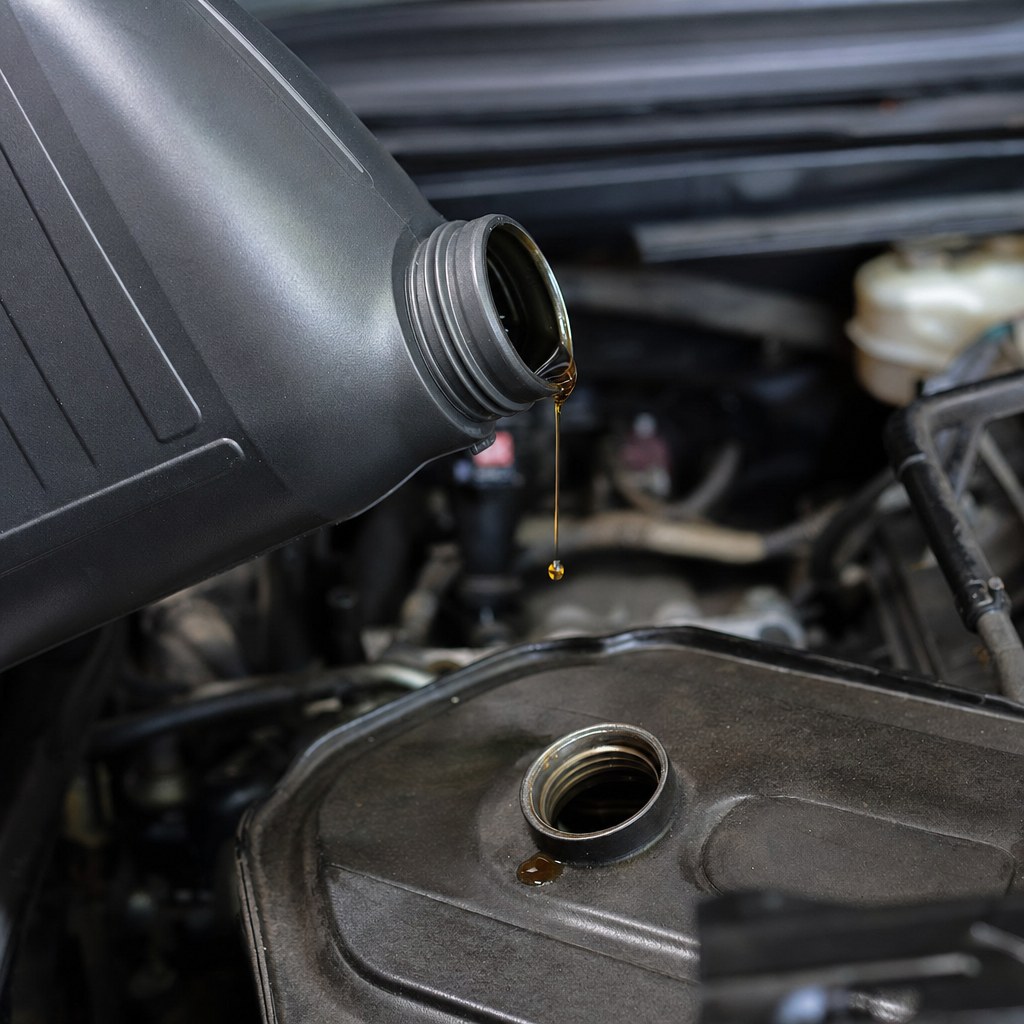
Preparing the mix properly is simple, but following the correct sequence ensures the oil blends evenly, leaving no concentrated residue at the bottom of the tank or container:
- Check your bike's manual or tank label for the exact ratio. If you're not sure, don't improvise: this first step is the most important.
- Calculate the required oil amount using the table above or by multiplying by 20 (for a 2% mix).
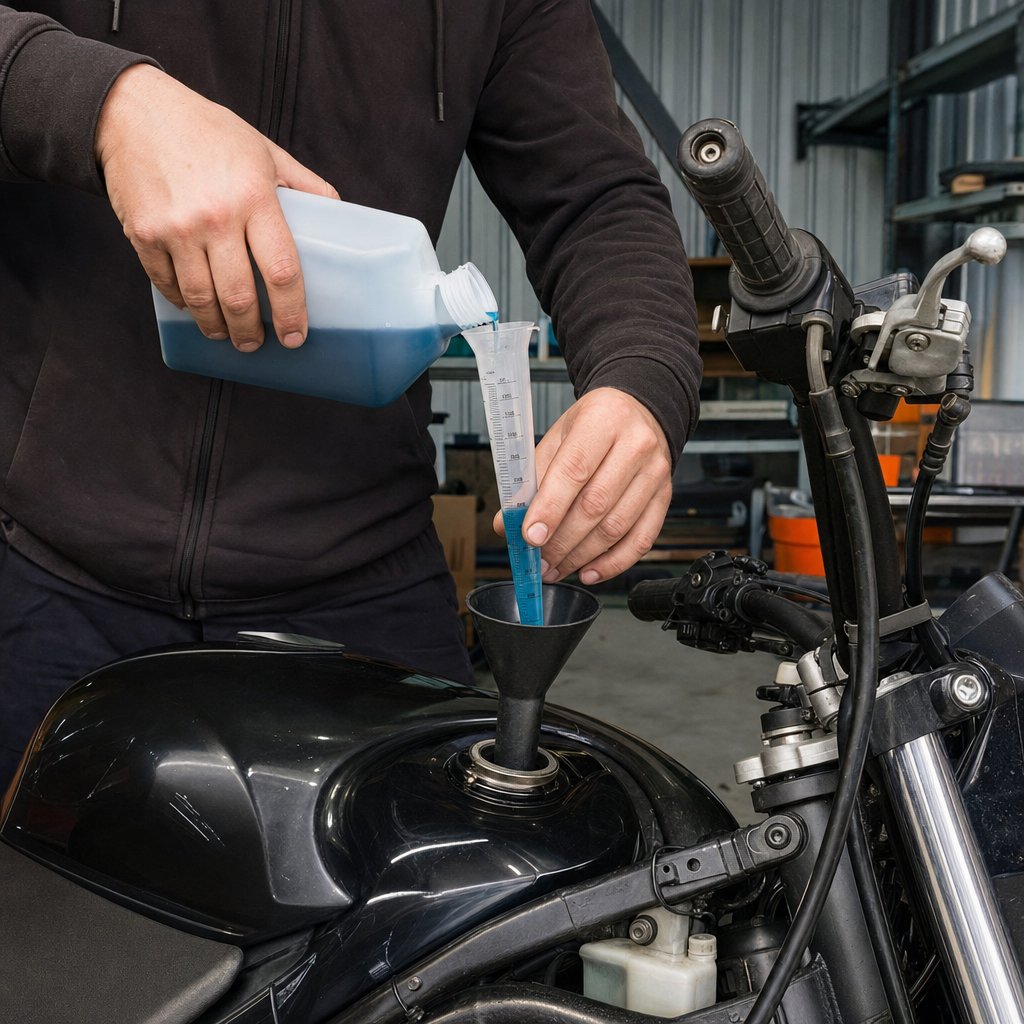
- Use a clean measuring container, preferably one graduated in milliliters designed for two-stroke mixtures. Avoid reusing containers that have had other liquids.
- First pour some of the gasoline into the tank or the mixing container.
- Add the pre-measured oil.
- Top up with the remaining gasoline and close the tank or container.
- Shake or stir the mixture so the oil blends well; if using a gas can, swirl it for a few seconds before pouring it into tank.
- Avoid mixing directly inside the bike’s tank without stirring afterwards, especially if the tank has an irregular shape that prevents the oil from distributing evenly.
This sequence -gasoline, oil, more gasoline and shaking- ensures a consistent mix right from the start, rather than relying on the bike’s movement to mix the oil.
What happens if the mixture has too much or too little oil
Using too much or too little oil has consequences, and neither scenario is harmless to the engine.
If there is too much oil in the mixture:
- More smoke in the exhaust, especially visible when cold and at low revolutions.
- Carbon buildup on the spark plug, piston, and exhaust system, which over time can lead to misfires or loss of performance.
- Less efficient combustion, as excess oil interferes with fuel combustion.
If there is little oil in the mixture:
- Insufficient lubrication of the cylinder and piston, which increases friction and wear in each engine cycle.
- Risk of engine seizure, meaning the piston seizes against the cylinder walls due to lack of oil film, resulting in severe engine damage.
- Localized overheating in poorly lubricated areas, which accelerates wear on critical components.
Why does the ratio vary by the model?
The mixing ratio is not universal, as it depends on each engine’s design and requirements.
Factors influencing the amount of oil needed:
- Engine displacement.
- Cooling system.
- Usual engine speed range.
- Engine technology.
Too much oil causes unnecessary residue, while a shortage compromises proper lubrication. The same type of machine may require different ratios depending on the manufacturer or even the specific model.
It is essential to always consult the user manual, instead of being guided by generic references. If in doubt about the ratio, it is better to err slightly on the side of too much oil rather than too little. However, the best practice is to always stick to the exact ratio specified by the manufacturer.
Repsol oils for two-stroke engines
Repsol has a range of oils specifically formulated for two-stroke engines, designed to offer optimal lubrication in the mixture with gasoline. These oils help reduce exhaust smoke, minimize deposits on the spark plug and in the combustion chamber, and protect the engine against wear, even under demanding operating conditions.
Choosing a suitable oil, such as those in the Repsol range for two-stroke engines, is key to ensuring the correct fuel-to-oil ratio, resulting in smoother, quieter, and more efficient engine performance. Furthermore, using it helps extend the lifespan of tools and equipment like chainsaws, brush cutters or mopeds, by providing constant protection against friction and high temperatures. For those looking for superior performance in demanding environments, the Repsol Extreme range offers formulations designed to maximize engine protection and performance, even under the most intensive use.