
Top tips

Everything you need to know about ATF oil

09 January 2024
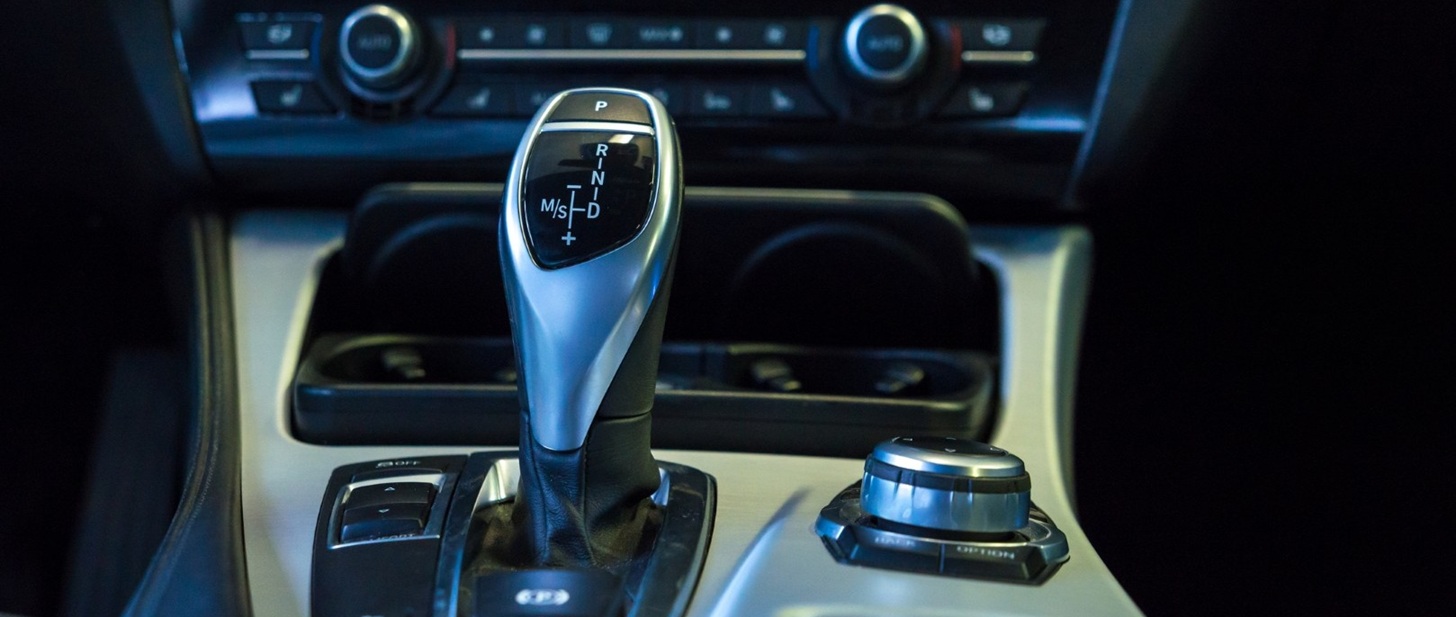
Automatic transmissions are increasingly complex and demanding, and are sometimes one of the most complicated mechanical components of a vehicle. That's why ATF (automatic transmission fluid) oil is an essential component to ensure the correct transfer of power from the engine to the drivetrain.
A thorough understanding of this type of oil is essential to ensure quality maintenance is provided. As such, here's a guide that addresses everything you need to know about this lubricating oil.
What is ATF oil?
As we already mentioned, ATF oil is designed to lubricate automatic transmissions, ensuring the highest operation, performance, and protection, as well as functions such as power transfer, cleaning, and cooling.
It is a hydraulic fluid that plays a crucial role as it joins the clutch discs and changes the gears. In this sense, it functions as an anti-wear agent and a corrosion inhibitor. ATF also precisely controls friction in clutches throughout the oil change, which is considered one of its most significant aspects.
Properties of ATF oil
In addition to all the benefits mentioned above, ATF lubricating oil is characterized by the following qualities:
- It guarantees silent, fluid, and efficient automatic gearbox operation.
- It allows for smooth gear changes due to friction stability.
- It has very good resistance to oxidation and thermal stability.
- It has excellent fluidity at low temperatures, which ensures smooth gear changes in severe weather conditions.
- Reduces fuel consumption, providing greater savings.
Types of ATF oil
There are three main types of automatic transmission: dual-clutch transmission, continuously-variable transmission, and step-type transmission. Each one is designed with specific properties and therefore requires a specific lubricating oil to suit its needs and meet the unique demands of certain car manufacturers and models. The following are some common types of ATF oil.
Synthetic lubricant for DCT or DSG type automatic transmissions
It provides faster and smoother gear shifting and helps reduce fuel consumption. This DCT and DSG (Dual Clutch Transmission and Direct Shift Gearbox, respectively) transmission oil has been designed for to be applied in transmissions of all major light vehicle manufacturers.
Synthetic lubricant for CVT-type automatic transmissions
CVT (Continuously Variable Transmission) fluid is suitable for both belt and chain drive transmissions and is recommended mainly for Asian vehicles.
Synthetic lubricant for commercial vehicles and buses
This lubricant works for vehicles with long periods between changes or in severe conditions, so an ATF oil for high-performance industrial vehicles is a must.
Synthetic lubricant for light vehicles, commercial vehiclesm and public works machinery
This long-lasting lubricant for automatic gearboxes is specially designed to meet the most demanding requirements of heavy vehicle automatic gearboxes.
Comparative table of Automator lubricants
Not all automatic systems work the same, and therefore not all need the same ATF oil. In addition to maintaining smooth shifting, they also help protect the transmission from wear, heat, and loss of performance over time.
If you want to learn more about the differences between these products and the role they play inside the vehicle, you can also check out this article on transmission fluids.
|
Product |
Type of transmission / application |
Recommended use |
What it offers |
|
Repsol Automator DCT |
DCT or DSG type dual-clutch automatic transmissions |
Passenger cars with dual clutch gearboxes |
It favors faster and smoother gear changes, helps control friction in the clutches, and contributes to a more efficient drive. |
|
Repsol Automator CVT |
CVT-type continuous variator automatic transmissions |
Vehicles with CVT boxes, especially Asian models |
Maintains progressive, stable, and smooth operation, even in belt or chain drives |
|
Repsol Automator ATF 14c |
Commercial vehicles and buses |
Demanding applications, with long change intervals or severe service conditions |
Offers thermal resistance, stability, and protection in intensive uses |
|
Repsol Automator ATF III |
Light vehicles, commercial vehicles, and public works machinery |
Automatic boxes requiring long-lasting fluid |
It provides reliability, wear protection, and good performance in demanding working conditions |
This comparison allows us to see more clearly that ATF oil is not a generic product. Each formulation is designed to meet specific friction, viscosity, temperature, and protection needs. That's why, before choosing, you should always check the manufacturer's manual.
In addition, the role of these fluids today goes beyond conventional vehicles. In electrified transmissions, it is also key to use products adapted to each system. If you want to know more about this context, you can read about lubricants for electric vehicles.
In short, ATF oil is much more than a lubricant: it is a key piece in the smoothness, protection, and useful life of a vehicles's automatic transmission. Knowing what type your vehicle needs, checking its condition and respecting the manufacturer's specifications makes the difference between stable operation and a breakdown that arrives early.
Frequently asked questions about ATF oil
What happens if my transmission lacks ATF oil?
When the ATF oil level is low, the automatic transmission can start working outside its normal conditions. That usually translates into sudden changes, skidding, jerks, delay when engaging gears, overheating, or abnormal noises.
This occurs because ATF fluid not only lubricates but also acts as hydraulic fluid within the system. If there is not enough, the internal pressure drops and several components stop working as they should. Maintaining the correct level is essential to avoid premature wear or more serious breakdowns.
How long or how many kilometers does ATF oil last?
There is no single figure valid for all vehicles. The service life of ATF oil depends on the type of transmission, the use of the car, and what the manufacturer indicates. Driving smoothly and mostly on the road is not the same as intense urban use, with traffic jams, towing, high temperatures, or high loads.
In general, many maintenance operations place the ATF fluid change between 60,000 and 100,000 kilometers, but the manufacturer's recommendation must always prevail. When we talk about ATF oil, we must also think about this: if it loses its properties, it stops protecting, cooling, and transmitting pressure as it should.
Can I mix different types of ATF oil?
Mixing different types of ATF oil is not recommended unless expressly authorized by the manufacturer. Each formulation is designed with specific viscosity, additive, and friction characteristics.
Mixing incompatible products can alter the operation of the transmission and lead to irregular shifts, poorer response, or insufficient protection. If there is any doubt about which fluid is in the vehicle, it is prudent to check the exact specification in the manual or consult a professional before refilling.
How do you know if automatic transmission oil is no longer working?
There are several symptoms that may indicate that ATF oil has lost its properties. Among the most common are roughness when changing gears, jerks, the delay in moving from one gear to another, the increase in temperature or the feeling that the transmission is "slipping."
It is also advisable to observe its appearance. An ATF liquid in good condition usually has a clean and uniform color. If it is very dark, smells burnt, or contains particles, it may be a sign of degradation. At that point, continuing to drive without overhaul can accelerate internal transmission wear.
What's the difference between ATF oil and regular motor oil?
Although both are lubricants, they work in very different environments. Engine oil is formulated to protect engine parts from friction, temperature, and combustion debris. ATF oil, on the other hand, is designed for automatic transmissions and must also fulfill a very precise hydraulic function.
That's why hydraulic ATF oil needs to control friction exactly, maintain stable viscosity and withstand high temperatures without losing performance. They are not interchangeable products. Using engine oil in an automatic transmission can cause major failures.
Is it necessary to change the ATF oil if the manufacturer says it does not need maintenance?
Some vehicles speak of "lifelong" or maintenance-free fluids. However, this expression does not always mean that the ATF oil retains its properties intact throughout the real life of the vehicle and in any condition of use.
Over time, heat, oxidation, friction, and particle contamination can degrade the fluid. That's why, even in theoretically sealed transmissions, a professional overhaul can be convenient if the vehicle accumulates many kilometers or works in demanding conditions. In these cases, assessing the condition of the ATF fluid can help prevent costly breakdowns.
Related contents
Outboard motor oil: 2-stroke vs 4-stroke, how to choose
Find out which oil your outboard engine needs depending on whether it is a 2 or 4-stroke, with the right viscosity and standard for your boat.
Show more
20 October 2026
Mineral vs Synthetic vs Semi-synthetic oil
Discover the differences between mineral, semi-synthetic, and synthetic oil, their pros, and which one to choose for your engine and driving style.
Show more
15 October 2026
Motorcycle coolant: water or specific liquid
Here's why water or a generic antifreeze does not protect like a motorcycle-specific coolant.
Show more
13 October 2026