
Top tips

0W-20 oil: engines, standards, and when to use it

14 May 2026
If your car is asking for 0W-20 oil, it's a good idea to look beyond viscosity. The key lies in also checking which standard the manufacturer requires and whether this lubricant has been developed for your specific engine. This is because not all 0w20s are the same, nor do they all work for the same mechanics.
In recent years, the use of 0w-20 engine oil has spread like wildfire in modern gasoline cars, hybrids, microhybrids, and some plug-in hybrids for three clear reasons:
- It helps reduce internal friction
- Improved cold start response
- It contributes to overall engine efficiency
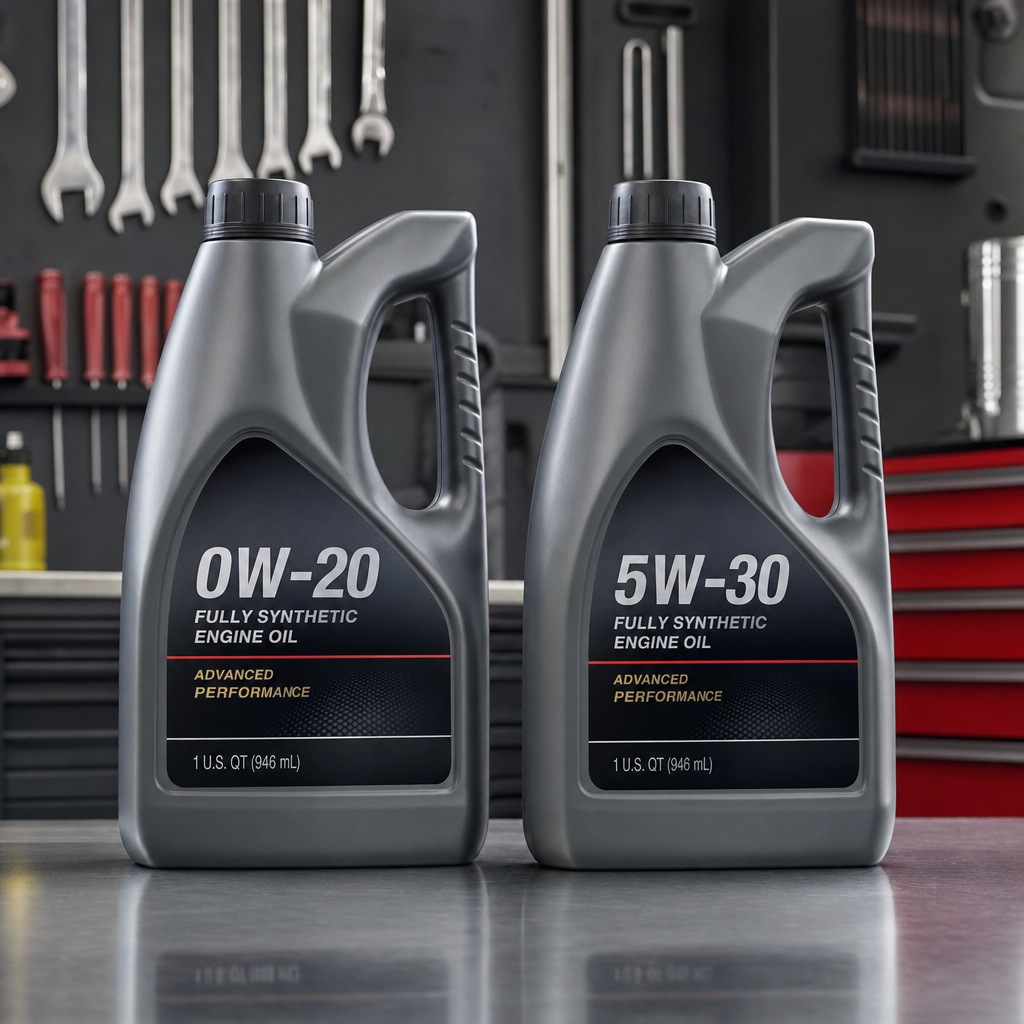
But that doesn't mean you can simply replace it with a 5w-30 or that any oil with that viscosity is going to work just as well.
If you are wondering what 0w20 oil is for, this article looks at what this viscosity means, what engines it's used in, what standards you should look for, and when it should be used.
In addition, if you want to delve into how a lubricant is classified, you can consult this guide on viscosity and also the ranges of Repsol Lubricants car oils.
What does 0W-20 viscosity mean?
The nomenclature "0W-20" tells us how the oil behaves at low and high temperature. It is very useful information to understand its fluidity, although it's not enough on its own to choose the right product.
What "0W" means: cold start behavior
The "0W" refers to the oil's behavior when it's cold. The "W," meanwhile, stands for "winter." In practice, it means that the lubricant maintains very good fluidity at low temperatures and can circulate quickly at start-up.
This is important because a significant part of engine wear occurs precisely in those first seconds, when the oil is still reaching critical areas. A 0W-20 oil helps make that initial lubrication faster, which is especially useful in short trips, city driving, or cold climates.
What the "20" stands for: hot viscosity and HTHS
The "20" indicates the viscosity of the lubricant when the engine has already reached its normal operating temperature (100 °C). In other words, how it keeps the lubricating film hot.
Here, the oil's HTHS viscosity also comes into play. This parameter measures the oil's behavior at high temperatures (150 °C) and subject to high shear. It therefore reflects how the lubricant responds in demanding conditions in which it must continue to protect parts under heavy load.
In any case, it's not enough to check whether your oil is 0W-20. Two products with the same SAE viscosity may have different formulations and levels of protection depending on the ACEA, API, ILSAC, or manufacturer-specific standard.
What engines is 0W-20 oil meant for?
The 0W-20 engine oil is especially suitable for engines designed from the beginning to work with low viscosities. These are modern mechanics, optimized to reduce consumption and emissions, with tighter tolerances and increasingly advanced control systems.
Modern low-displacement gasoline engines, microhybrids, and PHEVs
The most common thing is to find 0W-20 oil in modern small and medium displacement gasoline engines, both atmospheric and turbo, as well as in microhybrid, hybrid, and even some PHEV cars.
This is because they are vehicles in which efficiency is very important and where thermal engines frequently go from being shut off to starting up. In this scenario, the speed of cold lubrication and the reduction of internal friction provide a real benefit. Therefore, its viscosity is very present in lubricants for hybrid engines, where the combustion engine is constantly starting and shutting down.
Just because an engine is modern doesn't automatically mean it has to use 0W-20 oil. Some still require 5W-30, 0W-30, or even 0W-16. The best reference is always the manufacturer's manual.
Brands that require 0W-20 oil: BMW, PSA/Stellantis, Toyota, Honda - specific specifications
In brands such as Toyota or Honda, 0W-20 oil is prevalent in many of today's gasoline and hybrid engines. In these cases, in addition to viscosity, it is common to find requirements linked to standards such as API SP or ILSAC GF-6A, depending on the model and the year.
For BMW, some modern gasoline engines require 0W-20 oils with very specific standards, such as BMW Longlife-14 FE+. Here, it isn't enough to use any 0W-20 oil: the oil must be specifically approved for that requirement.
A different case is that of PSA/Stellantis, where it is advisable to review the exact specification with special care. This is because, within the group, there are some engines that work with low viscosities but do not all meet the same standard. In some cases, you may find references such as PSA B71 2290. In other, more recent engines, different specifications associated with 0W-20 oil can be found.
That is why, rather than just looking at viscosity, it is necessary to check the approval indicated by the vehicle's manufacturer. And in lubrication there are no shortcuts: the best opinion is the one that matches the owner's manual and the exact approval that the engine needs.

0W-20 oil standards: what they mean and why they matter
Standards provide confirmation that an oil has passed specific tests for a given manufacturer. Factors such as engine cleanliness, rust resistance, wear protection, compatibility with anti-pollution systems or tank control are evaluated. In other words, a correct lubricant is one that has been validated for that engine and for its working conditions.
BMW LL-14 FE+, PSA B71 2290, Honda HTO-06: how to identify them on the packaging
The correct way to check an approval is to check the product label and, if necessary, its technical data sheet. Expressions such as "approved," "compliant," "recommended for," or similar wording will usually appear. No less, they don't always mean the same thing.
If your car requires a formal standard, it is advisable to look for that reference to appear clearly on the packaging or in the technical documentation. With BMW, for example, if the engine requests LL-14 FE+, that approval must be expressly stated.
For Honda, something similar happens with specific specifications such as HTO-06, though here it is advisable to check the manual carefully as not all Honda engines that use low viscosity require the same standard.
In the case of PSA/Stellantis, the same thing happens: a specification such as B71 2290 can appear for certain engines, but it should not be assumed that any standard for the group corresponds to any 0W-20 oil. Viscosity offers guidelines, but the standard is what really makes the decision.
Advantages of 0W-20 vs. higher viscosities
Cold start, friction reduction, and real fuel savings
When the engine has been designed to work with this viscosity, 0W-20 engine oil offers clear advantages over higher ones.
- Cold start. The oil circulates smoothly from the very start and helps protect internal parts beforehand.
- Reduced friction and comfort of use. Being a more fluid lubricant than other higher viscosities, the engine needs less energy to move its internal components, making it run more smoothly and providing greater efficiency.
- Lower fuel consumption, especially in city driving or on routes with many stops and starts. This favors efficiency and can translate into lower fuel consumption.
However, this advantage only exists when the manufacturer has designed it this way. If your car is demanding 5W-30, it's not a good idea to switch to 0W-20 on your own. If you want to better understand how viscosities are classified, here is an explanation of what SAE means and the differences between monograde and multigrade oils.
Repsol 0W-20 oils: recommended ranges
Within the Repsol Lubricants portfolio, 0W-20 viscosity is present in different references to meet specific needs.
For gasoline and hybrid passenger cars, one option to consider is Repsol Leader Neo 0W-20, especially in vehicles that require current API and ILSAC levels. Repsol Leader Brio 0W-20 may also be suitable in compatible applications where gasoline is present.
On the other hand, for vehicles of the Volkswagen group that require the VW 508 00/509 00 standard, the specific reference is Repsol Master ECO V 0W-20.
As always, the correct choice should not be decided simply based on viscosity but on the specific standard required by the vehicle's manufacturer.
Frequently asked questions about 0w20 oil
Can I use 0W-20 oil instead of 5W-30 oil in my car?
Only if expressly permitted by the manufacturer. Though both seem very similar, they are not interchangeable by default. 0W-20 oil is less viscous when heated than 5W-30 and is intended for engines designed for that purpose. If your car is asking for 5W-30, changing despite the required standard can compromise protection or alter the lubricant's intended behavior.
In what type of engine is 0W-20 oil suitable?
It is mainly for modern gasoline engines, many hybrids, microhybrids, and some plug-in hybrids. It can also be used in certain very specific diesel engines, but only when indicated by the manufacturer. Whenever anyone wonders which engine 0W-20 oil is for, the answer is always the same: for engines whose owner's manual specifically ask for it.
How many kilometers is a 0W-20 oil good for before needing a change?
There is no universal amount. It depends on the engine, the type of driving, the fuel, the vehicle maintenance system, and the specific oil standard. In some cars, it can be around 15,000 kilometers, while in others it can be more. The best reference is always the manufacturer's maintenance schedule.
What's the difference between 0W-20 oil and 0W-16 oil?
Both behave very similarly in the cold, as they share the "0W" prefix. The difference is when they're heated. 0W-16 is even less viscous and is reserved for engines developed specifically for that viscosity. It must not be used as a general substitute for the 0W-20 oil unless expressly stated by the manufacturer.
Is 0W-20 oil also valid for diesel engines?
It may be in some cases, but it is not common in all diesel engines. There are modern diesel engines that do use low viscosities, although always associated with specific approvals and strict compatibility with systems such as the particulate filter. That's why, before using a 0W-20 engine oil in a diesel engine, you must check the vehicle's exact specifications.
Related content

Rally Morocco 2026
Discover how the Rally Morocco went and the participation of the Repsol Toyota Rally Team.
Show more
07 October 2026
0W-20 or 5W-30 oil: which one does your car use?
We explain why modern engines increasingly require lower-viscosity oils, such as 0W-20, and when it's best not to push the limits.
Show more
06 October 2026

Two-stroke motorcycle oil mixture
We explain the common oil-to-gasoline mix ratios for 2-stroke motorcycles and how to prepare it properly.
Show more
01 October 2026