
Top tips

UTTO oil for tractors: what it is, what it does, and how to choose the right one

09 June 2026
In a tractor, not everything depends on the engine. A good part of the daily work falls on the transmission, the hydraulic system, the power take-off, and the wet brakes. That's why choosing the right lubricant is key. In this context, UTTO 10W-30 oil is one of the most common options in agricultural machinery, but it does not serve "by default" for any equipment or for any use.
Understanding what a UTTO oil is, what it is used for, and how it differs from other solutions such as STOU will help you prevent noise, performance losses, and premature wear on critical tractor systems.
What is UTTO oil and why does your tractor need it?
UTTO oil is a lubricant formulated to cover the needs of multiple tractor systems with a single product. Its role goes far beyond "lubricating," as it also helps transmit power, control friction, protect components subjected to loads, and maintain stable operation in demanding working conditions.
UTTO = Universal tractor transmission oil: one oil for five systems in one
UTTO stands for Universal tractor transmission oil. That is, a fluid designed to work on the tractor transmission assembly and other associated systems that share lubrication, friction, and stability requirements.
Its main advantage is that it simplifies maintenance without sacrificing specific features. We're not talking about any generic oil but a formulation designed to respond to the specific needs of agricultural machinery, such as heavy loads, prolonged work, hydraulic use, and the presence of brakes or clutches immersed in oil.
Transmission, hydraulics, wet clutch, brakes, and PTO
On many tractors, UTTO oil is prepared to work in five key areas: the transmission, the hydraulic system, the wet clutch, the wet brakes, and the PTO or power take-off.
This means that the same fluid must be able to protect gears, maintain a constant hydraulic response, control friction in wet discs, and avoid noise or vibration during braking. Therefore, its formulation must be well balanced. If it fails on one of these points, the problem will soon appear in use in the form of abrupt changes, less accurate hydraulics, squeaks, or loss of touch.
If you want to learn more about these types of products, you may be interested in this guide on transmission fluids (in Spanish only) and and this article on hydraulic fluids in machinery.
Difference Between UTTO and STOU oil: when to use each
Although sometimes mentioned together, UTTO and STOU are not the same. The main difference lies in their respective scopes of application:
- UTTO is designed for transmission, hydraulics, wet brakes, wet clutches, and PTO. It is also used in more modern tractors.
- STOU adds one more function: if approved by the tractor's manufacturer, it can also be used in the engine. This, however, is usually applicable in older tractor models.
STOU also includes the engine: advantages and disadvantages
STOU stands for super tractor oil universal. The idea behind it is simple: a single lubricant for the engine, transmission, and hydraulics. On paper, this can be practical, especially in old fleets or farms where storage and maintenance needs to be simple.
This simplification is its clearest advantage. This means less references, less risk of confusion, and easier management in certain equipment.
However, it also has limits. An oil for use in the engine, transmission, and wet brakes has to balance very different requirements. In modern tractors, this won't always fit the manufacturer's specifications. Therefore, in many cases it's preferable to separate functions: engine oil on the one hand and UTTO on the other.
In other words, STOU can be useful when the OEM (original equipment manufacturer) expressly permits this use. If not, it's better to follow the technical recommendations and use a specific UTTO for transmission and hydraulics. Nor should it be confused with lubricants for other gear applications, such as an 80W-90 oil for transmissions and differentials, which responds to different needs.
Why is UTTO oil critical for wet tractor brakes?
Wet brakes work immersed in oil. This improves cooling and durability, but also makes the lubricant directly responsible for the system's behavior. It's not enough for it to "lubricate well." It must also offer the appropriate friction coefficient so that braking is progressive, silent, and stable.
When the oil is just right, the tractor brakes consistently and free of odd behavior. When it isn't, symptoms usually appear early.
What happens if you use an oil that is not suitable for wet brakes (squeaking, fading)
One of the most common problems is squeaking or "brake chatter." It occurs when the friction between discs is not well controlled and vibrations, noises, and jerking appear while braking. In addition to being uncomfortable, it is a sign that the system is not working in the conditions for which it was designed.
Fading may also occur. This is the loss of braking efficiency due to excess temperature or an unstable response by the lubricant. If premature wear, an uneven touch, and possible deposits are added to this, it ends up affecting the whole.
Therefore, in tractors with wet brakes we don't recommend using a "similar" oil but rather a formulation approved or aligned with the specifications required by the manufacturer.

How to choose the right UTTO for your tractor
Choosing the right oil always starts with the owner's manual published by the manufacturer, which will state the recommended viscosity and, above all, the technical specifications that the product must meet.
In addition to this basic reference, it's a good idea to look at the type of work carried out by the tractor, the ambient temperature, the usual hydraulic load, and whether the equipment works many hours in a row or in periods of increased intensity. A tractor that is continuously moving tools and implements, placing a high demand on the hydraulic system, does not have the same needs as another with a lighter or seasonal use.
It is also important to check whether the UTTO chosen is formulated for wet brakes and clutches, has good shear stability, and if it maintains the same level of performance both in cold and at service temperature.
What oil viscosity do you need
UTTO 10W-30 oil is one of the most common viscosities in tractors, precisely because it offers an excellent balance between fluidity in start-up and protection in service. However, that doesn't mean it's universal.
The right viscosity depends on the design of the transmission, the hydraulic system, and the temperature range in which the tractor works. In cold climates, proper fluidity helps the hydraulics respond earlier and with less effort. In intense working conditions or in higher temperatures, the stability of the lubricant is even more important to maintain the protective film and friction control.
The key is not to choose "the most commonly used" oil but the one your tractor asks for. If the manufacturer recommends a 10W-30 UTTO and the corresponding specification, that should be the reference. If tractor asks for another viscosity or a specifically approved product, that's what you should use.
Frequently asked questions about UTTO oil for tractors
What is the difference between UTTO oil and STOU oil for tractors?
The main difference is that the UTTO is designed for transmission, hydraulics, PTO, clutches, and wet brakes, while the STOU can also lubricate the engine. The STOU simplifies but does not always meet the demands of modern tractors. If the manufacturer separates the engine and the transmission, it is usually correct to use UTTO at the rear and the engine oil specified for the propeller.
Can I use the same UTTO oil in the transmission and tractor hydraulics?
Yes, that is precisely one of its main functions, as long as the tractor is designed for it and the product meets the required specification. A UTTO oil is formulated to work on both the transmission and the hydraulic system, as well as other associated tractor components.
How often does a tractor's UTTO oil need changing?
There is no universal guideline. It depends on the manufacturer, the model, and the type of use. It is safest to follow the maintenance plan indicated in the owner's manual. In intensive workloads, heavy hydraulic loads, or otherwise severe conditions, respecting the manufacturer's suggestions is even more important.
What happens if I use the wrong oil in the tractor's hydraulic system?
Several problems may appear: slow hydraulic response, pump cavitation, loss of efficiency, increased wear of pumps and valves, overheating, or incompatibility with wet brakes and clutches if the circuit shares lubricant. In practice, the wrong oil can affect much more than the hydraulic system.
Does UTTO 10W-30 oil work for all tractors?
No. Although UTTO 10W-30 oil is very common, not all tractors require that viscosity or the same specifications. Before use, check the recommendations and which products the manufacturer approves in the equipment's owner's manual. Merely being a frequently used viscosity does not mean that it is appropriate in any piece of machinery.
Related content

Rally Morocco 2026
Discover how the Rally Morocco went and the participation of the Repsol Toyota Rally Team.
Show more
07 October 2026
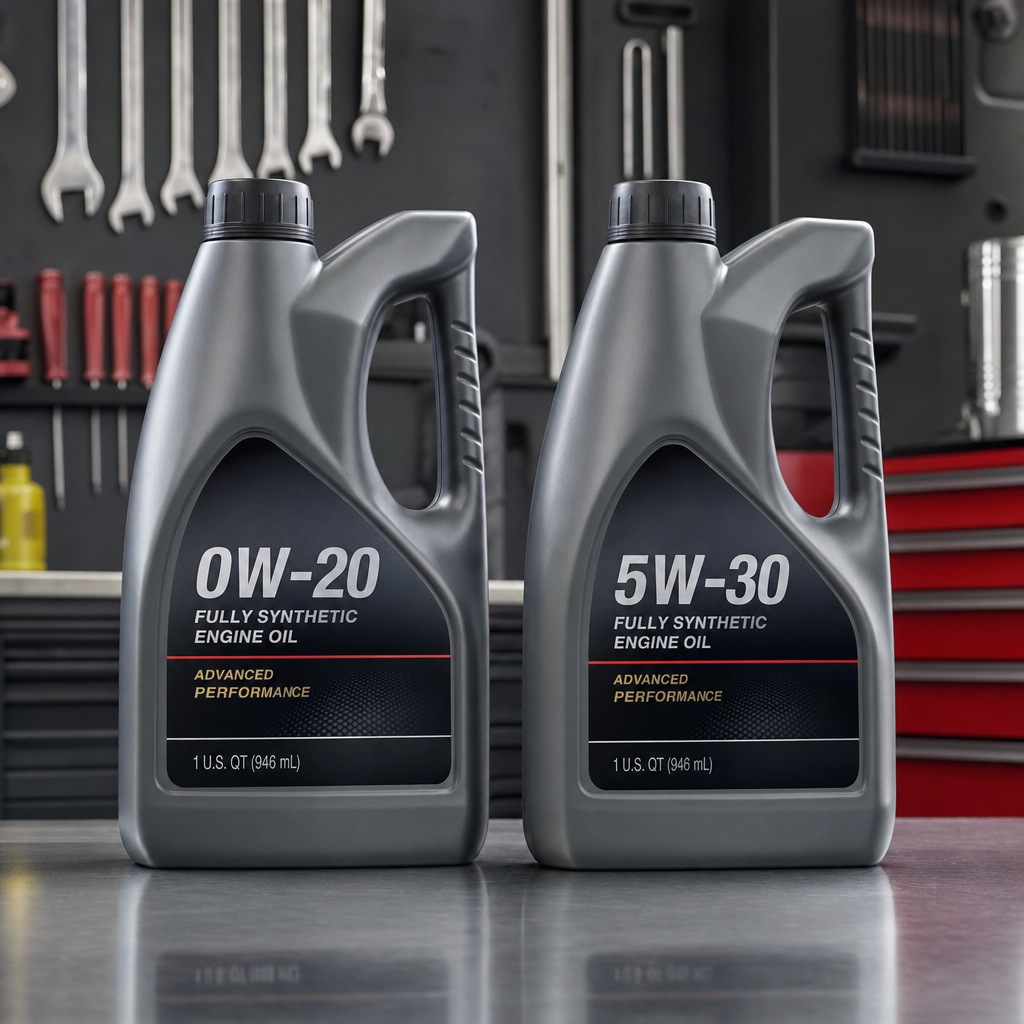
0W-20 or 5W-30 oil: which one does your car use?
We explain why modern engines increasingly require lower-viscosity oils, such as 0W-20, and when it's best not to push the limits.
Show more
06 October 2026

Two-stroke motorcycle oil mixture
We explain the common oil-to-gasoline mix ratios for 2-stroke motorcycles and how to prepare it properly.
Show more
01 October 2026