
Top tips

White smoke from the exhaust pipe: causes, diagnosis, and when to visit the mechanic
18 June 2026
Seeing white smoke coming out of your exhaust pipe can be an instant cause of concern. Sometimes it's just water vapor on a cold morning. But it could also be a sign that something is wrong with the engine and that you'd better act quickly. The key lies in paying attention to when the white smoke appears, how long it lasts, if it has a specific smell, and if it is accompanied by other symptoms such as loss of coolant, tugging, or an increase in temperature.
If you're wondering why smoke is coming out of your car, you should know that not all types of smoke mean the same thing. The color of the exhaust is a very useful clue about what is going on inside the engine. And when white smoke is persistent, dense, or also appears when accelerating, it may be warning of a major breakdown.
Is it normal for white smoke to come out of the exhaust?
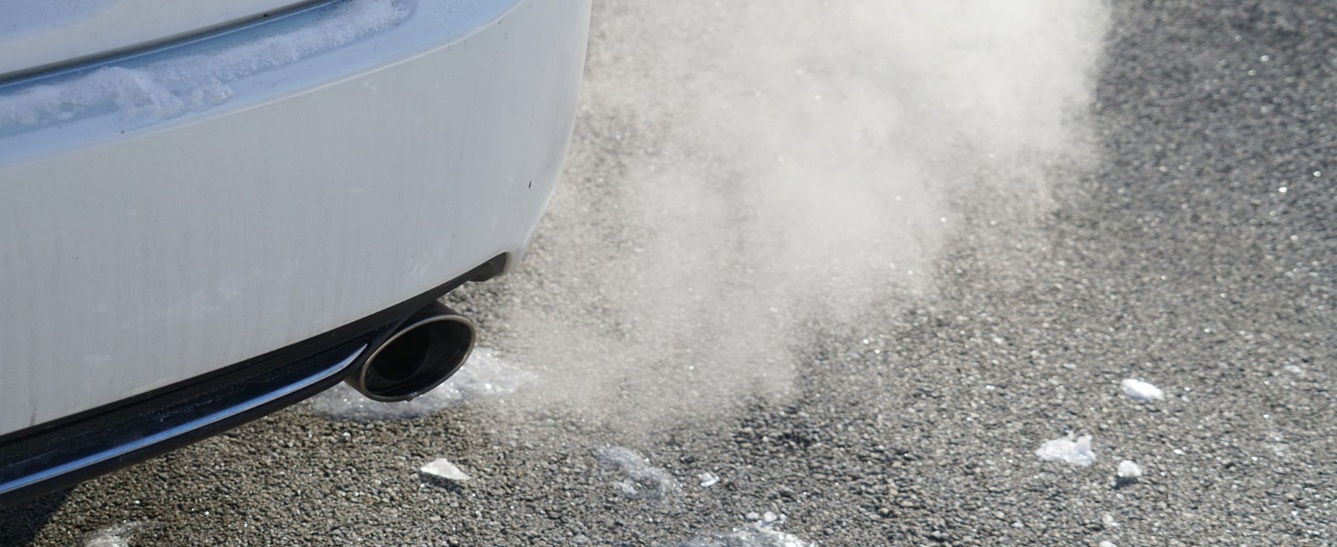
The short answer is that it depends. Not all white smoke in a gasoline or diesel car indicates a breakdown. In many cases, especially when the engine is cold, what comes out of the exhaust is not smoke in the strict sense, but steam.
Cold start water vapor: when it's completely normal
Water is generated during combustion. When the engine is cold and the outside temperature is low, some of that moisture condenses in the exhaust system and comes out for the first few minutes as fine white steam or water droplets, if the outside temperature is low. It is common and, by itself, it should not worry you.
This steam is usually light, almost translucent, and disappears when the car reaches its normal operating temperature. Sometimes you can also see a few drops of water coming out the exhaust pipe — this, too, in many cases, is perfectly normal.
Continuous, dense white smoke: a sure sign of a serious problem
The situation changes when the white smoke coming out your tailpipe does not disappear when the engine warms up, is abundant, is notable dense, and appears constantly. In that case, it's most likely that we are not dealing with simple condensation but with the entry of water or coolant into the combustion chamber.
When this happens, the engine burns that coolant along with the air-fuel mixture, and the result is thicker, more persistent white smoke, often with a characteristic sweet smell. If the coolant level also drops for no apparent reason, the signal is even clearer.
White, blue, and black smoke: what each color means
The color of the smoke helps guide the diagnosis. Though it's no substitute for being examined by a professional, it does let you identify where the problem may come from.
White: water or coolant in the combustion chamber
White smoke usually points to the presence of water or coolant within the combustion. If it only appears when starting the engine cold and leaves immediately, it is usually steam. If it persists, you should focus on the cooling system and on possible internal engine damage.
When white smoke appears in a diesel vehicle, it is also advisable to distinguish between condensation vapor and a continuous white smoke related to bad combustion or coolant entering the cylinders. Duration and density of the smoke are the two main clues.
Blue: oil burning (internal lubricant consumption)
Blue smoke indicates that the engine is burning oil. It is usually related to worn out segments, valve seals, turbo, or crankcase ventilation issues. Blue smoke may also appear when accelerating if the engine is starting to consume lubricant due to an internal breakdown or accumulated wear.
Black or dark gray: a rich mix, injection problems, or particulate filter
Black or dark gray smoke often indicates an overly rich or incorrect fuel mixture. It can be due to injectors in poor condition, a clogged air filter, sensor failures, intake problems, or problems with the particulate filter in diesel vehicles. It is not usually related to water or coolant, but it is related to poor combustion and an increase in emissions.
Causes of persistent white smoke
When white car smoke is constant and does not disappear when hot, there are several possible causes. Some are more frequent than others, but all require prompt attention to avoid further damage.
Broken cylinder head gasket: the main suspect
The cylinder head gasket is responsible for properly sealing the engine block and the cylinder head, separating the passage from the oil, coolant, and combustion gases. When it fails, the coolant can pass into the combustion chamber and burn next to the fuel. That is one of the most common reasons for persistent white smoke.
In addition to smoke, other symptoms may appear: lowering of the coolant level, an increase in temperature, irregular operation of the engine, excessive pressure in the cooling circuit, and emulsion in the oil. This is a serious problem and should be detected as soon as possible.
A crack in the cylinder head or in the engine block
In more severe cases, the problem is not only in the gasket but in a crack in the cylinder head or in the block itself. The effect can be similar: coolant ingress into the cylinders, dense white smoke, and risk of overheating. The difference is that repair is often more complex and expensive.
This type of damage can occur after an episode of severe overheating or due to thermal fatigue over time. That's why it's so important to stop driving when the engine shows clear signs of high temperature or loss of coolant.
Turbocharger problems (in turbo engines)
In turbo engines, some turbocharger breakdowns can also result in visible exhaust smoke. The most common thing is that a damaged turbo generates bluish smoke due to the passage of oil, but in certain circumstances it can also contribute to abnormal combustion or whitish emissions (especially if there is liquid cooling involved or associated damage to the system).
In any case, when the appearance of white smoke intensifies when accelerating a turbo engine, it's a good idea to check not only the cylinder head and cooling circuit, but also the state of the turbo and its ducts.
How to diagnose the origin of white smoke at home
There are several simple checks that can guide you before going to the workshop. They do not replace a professional diagnosis, but they do help detect red flags.
Oil plug test: if there's milky foam, it's the cylinder head
When removing the oil cap, some people look for traces of a creamy or foamy beige substance. This emulsion can indicate that the oil is mixing with water or coolant, which usually points to a cylinder head gasket failure or an internal crack.
However, you should get confirmation. It's not always a definitive test. On very short journeys or with a lot of ambient humidity, some condensation may appear on the lid without there being a serious breakdown. The important thing is to evaluate all the symptoms: constant white smoke, a dropping coolant level, oil with a milky appearance, and overheating. When several signs coincide, there's more cause for suspicion.
Expansion tank water analysis: color and level
Another useful check is to observe the expansion tank while the engine is cold. If the level has dropped with no visible leaks, if the coolant has an odd coloring, or if lingering oily debris or bubbles appear, there may be a connection between the cooling circuit and the interior of the engine.
It is also advisable to monitor if the sleeve becomes excessively hard shortly after starting or if the reservoir abnormally builds up pressure. These are indications that may point to combustion gases entering the circuit.
Can I keep driving if white smoke comes out? When to stop immediately
If the car gives off a fine white steam only during cold start and disappears after a few minutes, there shouldn't be any reason to stop the vehicle. However, if the white smoke through the exhaust pipe is abundant, constant, and accompanied by loss of power, high temperature, a sweet smell, or lowering of the coolant level, it is prudent to stop as soon as possible.
Continuing to drive in these conditions can greatly aggravate the breakdown. A failure of the cylinder head gasket, for example, can end up causing deformations, cylinder head damage, oil contamination, and accelerated wear of internal components. In other words, what can be repaired at first can become a much more serious breakdown.
You must stop the car immediately if dense white smoke appears suddenly, if the temperature gauge rises above normal, if you notice tugging or clear loss of performance, or if a warning light related to the engine temperature comes on. At that time, it is best to turn off the car in a safe place, let the engine cool and ask for assistance or visit the mechanic.

Frequently asked questions about white car smoke
Is water coming out of the exhaust pipe of a vehicle normal?
In many cases, yes. The outflow of water through the exhaust pipe is a normal consequence of condensation and combustion, especially when cold. If it's a few drops of water or light steam that disappears when the car warms up, it does not usually indicate a problem. Cause of concern begins when that water outlet is accompanied by dense white smoke, a strange odor, or loss of coolant.
Can I drive my car if there is white smoke coming out the tailpipe?
It depends on the type of smoke. If it's a light cold steam and disappears quickly, yes. If the white smoke coming out of a gas or diesel car is hot, thick, or appears next to overheating or lowering the coolant, it is not advisable to continue circulating. It is appropriate to check the vehicle as soon as possible to avoid further damage.
What does white smoke in a diesel engine mean?
In a diesel engine, white smoke can be due to simple cold water vapor, but also to coolant entering combustion or, in some cases, poor combustion. To tell the difference, you have to look at whether the smoke remains hot, dense, whether's there a peculiar odor, and if the car has other symptoms. If your diesel engine vehicle emits white smoke continuously, it needs to be checked.
My car is smoking white and smells like something is burning, what's wrong with it?
If the white smoke is accompanied by a sweet smell or an unusual burning smell, there may be coolant reaching the combustion chamber or coming into contact with very hot areas of the engine. Other faults, such as external leaks or turbo problems, could also exist. In this scenario, don't delay a visit to the workshop.
Related content
How many liters of oil does my car need?
Find out how many liters of oil your car needs depending on the type of engine and why it is key to use the exact recommended amount.
Show more
22 October 2026
Outboard motor oil: 2-stroke vs 4-stroke, how to choose
Find out which oil your outboard engine needs depending on whether it is a 2 or 4-stroke, with the right viscosity and standard for your boat.
Show more
20 October 2026
Mineral vs Synthetic vs Semi-synthetic oil
Discover the differences between mineral, semi-synthetic, and synthetic oil, their pros, and which one to choose for your engine and driving style.
Show more
15 October 2026