
Top tips

Cabin filter: what it is, what it's used for, and when to change it
22 June 2026
The cabin filter is one of those elements of the car that go unnoticed... until funny smells start appearing, the air stops blowing as hard, or the windows fog up more than usual. Though it's not directly related to the lubrication or internal workings of the engine, it does have a clear impact on comfort, the quality of the air you breathe, and the overall performance of the air conditioning system.
If you've ever heard of a cabin filter, air conditioning filter, pollen filter, or car pollen filter, know that they're all nearly the same thing. In this article, we'll explain what it does, what it can really filter, and how often it should be changed.
And to continue learning more about vehicle maintenance and care, you can also read this Repsol Lubricants guide about the most common problems with motor oils and their solutions.
What is the cabin filter?
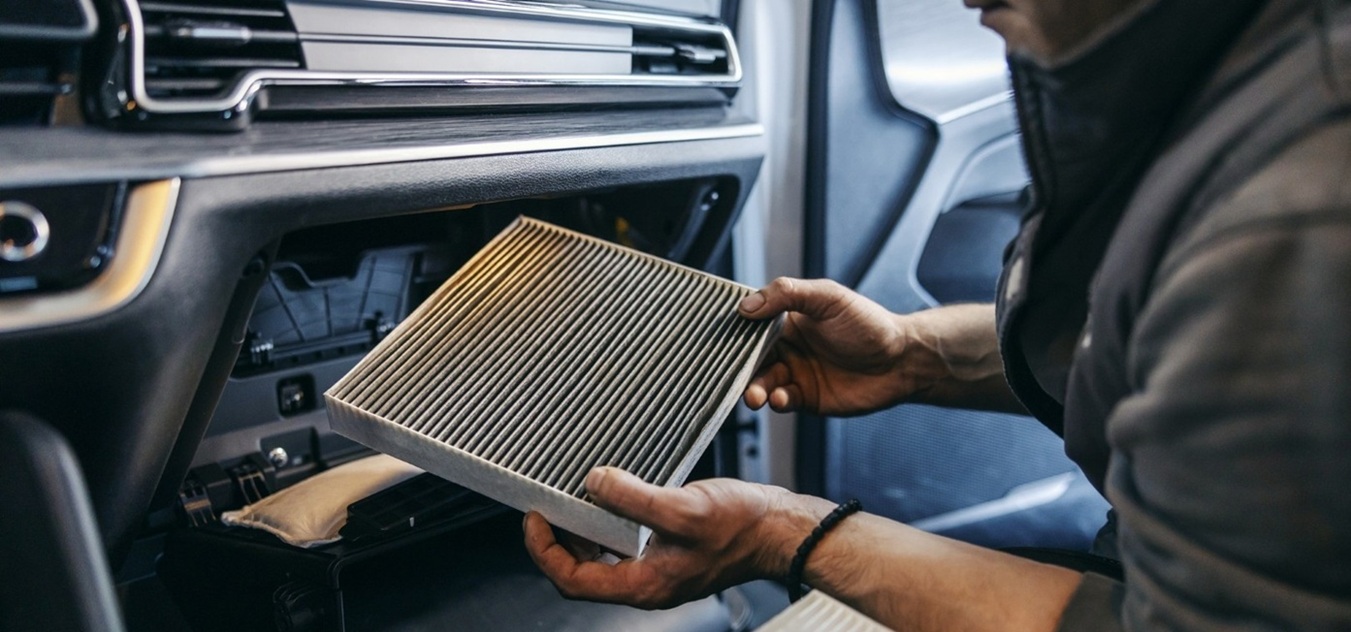
The cabin filter is the component responsible for cleaning the air that enters the interior of the car through the ventilation, heating, and air conditioning system. It is normally located in the dashboard area, behind the glove compartment or near the base of the windshield, and acts as a barrier against particles and contaminants from the outside.
Its job is simple but important: to prevent dust, pollen, dirt, and other particles from entering the cabin. Depending on the type of filter, it can also help to retain odors and certain gases present in urban traffic.
Simply put, if the air conditioning system is what moves the air, it's the cabin filter that decides under what conditions that air enters the car.
Cabin filter, air conditioning filter, anti-pollen and cabin filter: are they the same thing?
In most cases, yes. They are different names for the same element or its very similar variants.
When talking about a car's air conditioning filter, you're usually talking about the cabin filter, because it works together with the HVAC system. The same applies to the terms pollen filter or cabin filter: they all point to the part that cleans the air before it reaches the interior of the vehicle.
The real difference is usually not in the name, but in the type of filter material. There are standard filters, focused on particles, and others with activated carbon or specific treatments that offer broader protection against odors and certain pollutants.
Differences between cabin filters and engine air filters
It's easy to confuse them, but they don't do the same job. The cabin filter cleans the air that the occupants of the vehicle breathe. Its scope is the interior of the car and the ventilation system. The engine air filter, on the other hand, cleans the air entering the intake for combustion. Its mission is to protect the engine and ensure that it operates at the proper air flow.
One is designed for your comfort and air quality in the cabin. The other, for mechanical performance. Both are important, but each serves a different function.
What exactly does it filter? Particulate matter, pollens, bacteria, and gases
Not all cabin filters offer the same level of protection. What they can retain depends on the design and the filter itself.
Standard filters: dust, pollen, and PM2.5 particles
The standard filter is designed to retain solid particles in suspension, such as dust, soot, dirt, fine sand, and pollen. In the most effective models there may also be retention of fine particles, including PM2.5, which are especially relevant in urban environments with heavy traffic.
However, it is important to note that not all standard filters filter PM2.5 with the same efficiency. It depends on the manufacturer, the quality of the material, and the condition of the filter itself. That's why, in addition to assembling it, you have to change it when appropriate.
Activated carbon filters: also retains gases, bacteria, and odors
Activated carbon filters add a layer that improves the retention of gases and compounds responsible for foul smells. They are especially useful in cities, tunnels, industrial areas, or routes with heavy traffic.
In addition to particles and pollen, this type of filter can help reduce the presence of gaseous pollutants and improve the feeling of clean air inside the car. Some advanced models also incorporate treatments that limit the proliferation of bacteria and fungi on the filter surface.
Consequently, when a bad smell appears when the air conditioner is turned on, it is not always enough to give more power to the air, but many times the problem is in a saturated or aged cabin filter.
Are cabin filters able to filter out viruses? What the science says
The short answer is: it depends on the type of filter, but it's never a good idea to make absolute promises.
Conventional cabin filters are mainly designed to retain particles, particles, and pollen. Some more advanced filters, with high-efficiency means or specific treatments, can reduce part of the aerosols and microorganisms present in the air. However, this does not mean that any cabin filter blocks viruses in a guaranteed way or that it alone prevents infections.
All available evidence tells us that the ability to filter viruses depends on the size of the carrier particles, the actual efficiency of the filter material, the adjustment of the system, and the conditions of use. That is, a good filter helps improve indoor air quality, but does not replace other ventilation and hygiene measures when we talk about respiratory health.
Symptoms of a dirty or clogged cabin filter
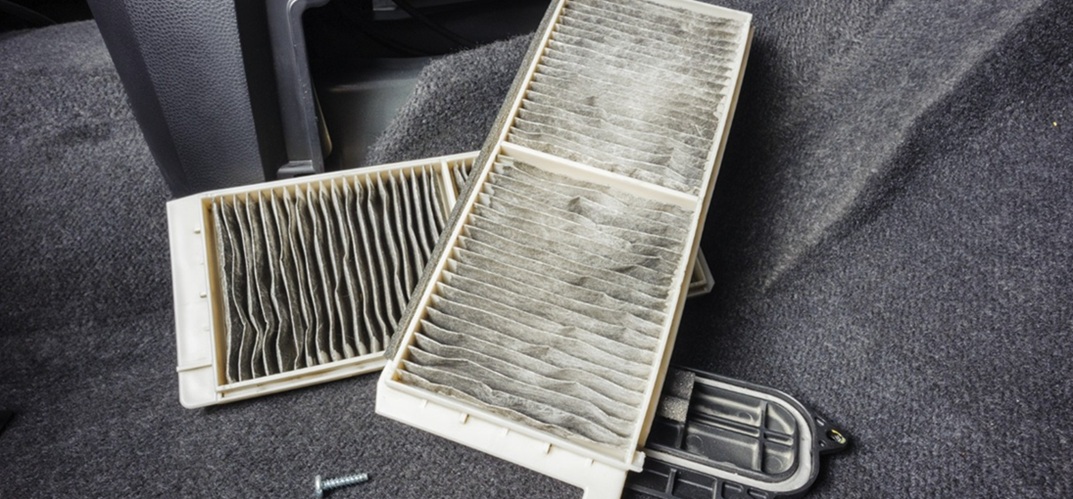
A car pollen filter in poor condition is not always visible to the naked eye, but it usually gives fairly clear signals.
Bad smells when turning on the air conditioner
This is one of the most common symptoms. If an damp, stale, or otherwise dirty smell appears when the air conditioning or heating is connected, the filter may be saturated. There may also be dirt in ducts or on the evaporator, but the first point to check is usually the filter.
Less ventilation power
If you notice that less air is coming out even though the fan is working as usual, it is possible that the cabin filter is clogged. The air encounters more resistance to pass through and the system loses efficiency.
It's not just about comfort. A lower air flow forces the air conditioner to work harder and can make defrosting or cooling the interior take longer.
Windows that fog easily
When the ventilation system doesn't circulate the air well, it's less capable of removing humidity from the vehicle interior. The result is a car that fogs up earlier and takes longer to regain visibility, especially in winter or on rainy days.
If this occurs along with an odd odor or loss of air flow, the pollen filter is a clear candidate for revision.
How often do I need to change the cabin filter?
The frequency of change depends on how much you use your car, the conditions around it, and what the owner's manual suggests. Aside from all that, there's a pretty clear rule of thumb.
Rule of thumb: every 15,000–20,000 km or once a year
The safest recommendation is to consult the vehicle's owner's manual, which should indicate the specific range for your model.
As an orientation, the cabin filter is usually changed every 15,000 to 20,000 km or once a year. And, even if you do not reach that mileage, time also counts: the filter accumulates moisture, dirt, and pollutants, even if you only use your car a little.
When to change it first: city, pollen, children, or allergy sufferers
Under certain conditions, it makes sense to change the filter ahead of time. For example, if you drive a lot in the city, spend time in traffic jams, drive in areas with a lot of air particles, or if there have been sustained high levels of pollen concentration, the filter may become saturated earlier.
It is also advisable to set the bar higher with maintenance when children, allergy sufferers, or passengers sensitive to air quality travel frequently with you. In these cases, using a clean cabin filter makes a real difference in daily comfort.
How to change the cabin filter step by step (without visiting the mechanic)
In many cars, it's a simple operation that you can perform at home. However, how to access the filter varies depending on the model, so check your owner's manual before you start.
- Step 1. Locate the filter. It is usually behind the glove compartment, on the center console, or under the grill at the base of the windshield.
- Step 2. Turn off the car and remove the key. If you are going to disassemble an internal cover, make sure you have sufficient light and that the cabin is clean.
- Step 3. Open the compartment or remove the access cover. In some vehicles, all you have to do is release a few tabs. In others, however, the glove compartment must be partially or completely disassembled.
- Step 4. Extract the old filter carefully. Take note of the filter's position and especially the direction of air flow marked with an arrow.
- Step 5. Examine the space. If there are leaves, dust, or dirt, remove them carefully before putting in the new filter.
- Step 6. Place the new filter in the same position as the previous one. Respecting the direction of air flow is key to ensuring that it works properly.
- Step 7. Reassemble the lid or glove box and make sure everything is secure.
- Step 8. Turn on the fan and check that the air flow is normal and no strange noises appear.
If getting to the filter is difficult or requires delicate disassembly, the most practical thing is to take your car to a mechanic. Sometimes, if a lid or an anchor breaks, saving a few minutes can end up being more expensive.
Frequently asked questions about the cabin filter
What happens if the cabin filter is not changed?
Typically, the air quality inside the car worsens, bad odors increase, and the flow of ventilation is reduced. In addition, the HVAC system can work less effectively and the glass will tend to fog up more. It does not usually cause an immediate breakdown, but it does detract from comfort and may compromise the proper functioning of the ventilation system.
How often is the cabin filter changed in in terms of mileage or time?
The most common reference is every 15,000 to 20,000 km or once a year. If you drive a lot in the city, in areas with particles, or with a high presence of pollen, it may be a good idea to change the filter ahead of time.
Does the cabin filter protect against PM2.5 particles and bacteria?
Yes, but it depends. Many modern cabin filters are prepared to retain fine particles, including part of the PM2.5 particles, and some advanced filters incorporate layers of activated carbon or specific treatments that help against bacteria, odors, and other contaminants. The exact effectiveness depends on the type of filter and its condition. A saturated filter no longer protects the same.
Related content

Rally Morocco 2026
Discover how the Rally Morocco went and the participation of the Repsol Toyota Rally Team.
Show more
07 October 2026
0W-20 or 5W-30 oil: which one does your car use?
Discover the real difference between ACEA C2 and C3 oil, both suitable for the particulate filter, and which one your car needs.
Show more
06 October 2026
Two-stroke motorcycle oil mixture
We explain the common oil-to-gasoline mix ratios for 2-stroke motorcycles and how to prepare it properly.
Show more
01 October 2026