
Top tips
Hydraulic oil
Hydraulic oil
How to choose ISO VG 32, 46 or 68 hydraulic oil
How to choose ISO VG 32, 46 or 68 hydraulic oil
Learn how to choose the ISO VG viscosity of your hydraulic oil (32, 46 or 68) based on your equipment and operating temperature.
Choosing the wrong hydraulic oil viscosity can lead to leaks, overheating, or premature wear on pumps and valves. In this technical guide, we explain what the ISO VG classification means, how grades 32, 46 and 68 differ, and how to determine which one your equipment needs based on its operating temperature and manufacturer recommendations.
At Repsol Lubricants we work daily with repair shops, industrial plants, and maintenance departments that need to answer this question using technical criteria, not habit. If you would like to browse the full range of industrial lubricants available for each application, you can do so in our online catalog. Below, we will review the key concepts so that your decision is backed by data, not assumptions.

What is ISO VG hydraulic oil?
Before comparing grades, it helps to break down the acronym. ISO refers to the *International Organization for Standardization,* the body that standardizes technical classifications internationally. VG stands for *Viscosity Grade.*
Viscosity is the resistance of a fluid to flow: the more viscous an oil is, the "thicker" it is and the harder it is to move through the oil passages and components of the hydraulic system. ISO 3448 classifies industrial oils into different VG grades based on their kinematic viscosity measured in centistokes (cSt) at a reference temperature of 40°C.
Each number (32, 46, 68, among others) corresponds approximately to the mindpoint viscosity of the oil under these conditions. Thus, an ISO VG 46 oil has a nominal viscosity of 46 cSt at 40°C, with an allowable range under the standard of 41.4 to 50.6 cSt. This system allows you to compare oils from different manufacturers under the same objective criteria, which is especially useful for anyone managing maintenance across several pieces of equipment with different specifications. In this regards, the Repsol Maker range offers a wide variety of industrial lubricants formulated to cover these different ISO VG viscosity grades, making it easy to select the right product for every application.
Differences between ISO VG 32, 46, and 68
Differences between ISO VG 32, 46, and 68
The three most common grades in industrial and mobile hydraulic systems are 32, 46 and 68, and their main difference is the kinematic viscosity range at 40°C:
- ISO VG 32: nominal viscosity of 32 cSt (indicative range 28.8-35.2 cSt). It is the thinnest of the three.
- ISO VG 46: nominal viscosity of 46 cSt (indicative range 41.4-50.6 cSt). It is the most widely used in general-purpose hydraulic equipment.
- ISO VG 68: nominal viscosity of 68 cSt (indicative range 61.2-74.8 cSt). It is the thickest of the three and is often used in equipment operating at higher temperatures or requiring a thicker oil film.
- The higher the number, the higher the viscosity, and therefore the thicker the oil film that separates the moving metal surfaces inside pumps, valves and cylinders. This lubricating film helps prevent metal-to-metal contact and reduces component wear.
Selecting one grade over another does not depend on operator preference, but on three factors we will break down: equipment design, ambient, and operating system temperatures, and the manufacturer’s explicit recommendations.
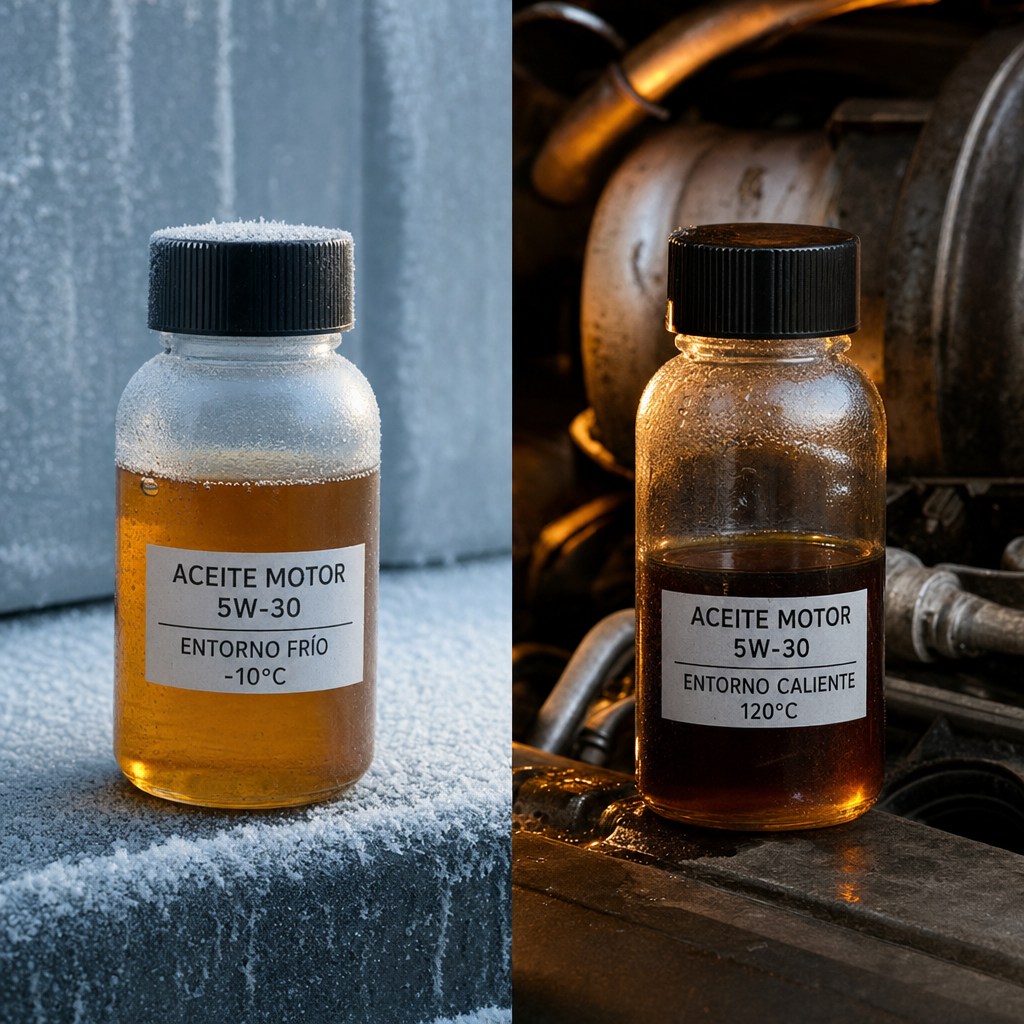
It is important to bear in mind that the ISO VG classification is based on viscosity measured at 40°C. However, the actual oil viscosity varies with operating temperature: the hotter the oil gets, the thinner it becomes; the cooler it gets, the thicker it becomes.
When to choose ISO VG 32
When to choose ISO VG 32
ISO VG 32 is typically recommended for systems operating at low or moderate operating temperatures, or in cold climates where the oil must maintain good fluidity upon cold starting. It is common to find it in:
- Precision hydraulics systems with tight-clearance components.
- Indoor equipment operating under stable and relatively low ambient temperature.
- Machine tools and applications where the fast fluid response and reduced internal friction losses are prioritized.
Its lower viscosity facilitates cold starts and reduces energy losses from internal fluid friction, but also implies that the oil film is thinner. Consequently, it may not be suitable if the system reaches high temperatures on a regular basis, as the viscosity could drop below the manufacturer’s recommendation, thinning excessively and losing its protective capability.
When to choose ISO VG 46
When to choose ISO VG 46
ISO VG 46 is by far the most widely used grade in general-purpose industrial hydraulic systems: presses, hydraulic systems for construction machinery, elevators, injection molding machines, and many others. Its intermediate viscosity offers a good balance between:
- Sufficient fluidity for reasonable starting at standard room temperature.
- Suitable film thickness for operating conditions at moderate-to-high temperatures, typical of continuous duty cycle.
- Due to its balance of fluidity and protection, ISO VG 46 is one of the most widely used grades in industrial hydraulic systems. However, the final selection must always be based on the manufacturer's recommendations and the actual operating conditions of the equipment.
When to choose ISO VG 68
When to choose ISO VG 68
ISO VG 68 is tipically used when equipment requires higher viscosity or when operating temperatures are higher. It is common to find it in:
- Equipment operating in warm environments or generating significant heat during the duty cycle (for example, systems with high-flow pumps or sustained high pressures).
- Equipment for which the manufacturer recommends a higher viscosity to maintain a suitable oil film in service.
- In certain equipment with larger internal clearances, provided that it is compatible with the manufacturer's recommendations, a higher viscosity can help maintain the internal seal and reduce internal leakage.
Why is it important to choose the right ISO VG?
Why is it important to choose the right ISO VG?
The ISO VG (Viscosity Grade) code classifies industrial oils according to their kinematic viscosity, measured in centistokes (cSt) at 40°C. Choosing the right grade is no minor detail: the performance and service life of the machinery depend directly on it.
An oil with a lower viscosity than recommended may be too thin for the operating conditions, reducing the thickness of the oil film between metal surfaces. This promotes direct contact between parts, increases wear, generates more friction and heat, and can lead to premature equipment failure.
On the other hand, an oil that is too viscous makes it difficult for the lubricant to flow through the system, especially during cold starts or in precision components. This higher resistance leads to higher energy consumption, increased operating temperature, and a slower or less efficient hydraulic system response.
In addition, each industrial machinery manufacturer specifies the ideal ISO VG for its equipment based on variables such as operating temperature, component speed, applied load and, application type (hydraulics, gears, compressors, etc.). Following this recommendation not only optimizes operation and energy efficiency, but also prevents costly breakdowns, extends maintenance intervals, and protects the equipment warranty.
In short, selecting the right viscosity grade is a key decision in any industrial maintenance plan, as it impacts both facility reliability and long-term operating cost reduction.
Consequences of using the wrong viscosity
Using a viscosity other than the one recommended by the manufacturer can affect the performance and service life of the hydraulic system.
• If the viscosity is too low, the oil may become excessively thin for the operating conditions, reducing the thickness of the oil film. This can increase wear, internal leakage, and loss of system efficiency.
• If the viscosity is too high, the oil can create excessive flow resistance, hinder cold starts, increase energy consumption, and slow down hydraulic system response.
For this reason, using the manufacturer-recommended ISO VG grade is essential to ensuring the reliable and efficient operation of the equipment.
How to know which ISO VG your equipment need
How to know which ISO VG your equipment need
The most reliable way to determine the appropriate ISO VG viscosity grade is to consult the equipment manufacturer's manual, as this document specifies the recommended viscosity based on the design conditions of the hydraulic system. It is also advisable to take into account factors such as the ambient and operating temperature, pump type, operating speed, and load conditions to which the equipment will be subjected, as all these elements influence oil behavior. When in doubt, it is best to consult a technical specialist or the lubricant manufacturer. They can provide guidance on the most suitable option for each specific application, thus avoiding issues caused by improper maintenance.
How often should industrial hydraulic oil be change
How often should industrial hydraulic oil be change
The oil change interval for industrial hydraulic fluic does not follow a set rule; rather, it depends on equipment operating conditions, operating hours, workload, and operating environment. As a general rule, it is recommended to follow the hydraulic system manufacturer’s instructions, which tipically set intervals based on operating hours or specific timeframes.
However, best practice is to support this schedule with regular oil analysis, which helps verify its actual condition: contamination levels, additive degradation, presence of particulate matter, or loss of viscosity. This monitoring allows oil change to be tailored to the actual needs of the equipment, preventing both premature oil replacements and the use of degraded lubricant, which could compromise the performance and service life of the hydraulic system.
Related Content
Related Content